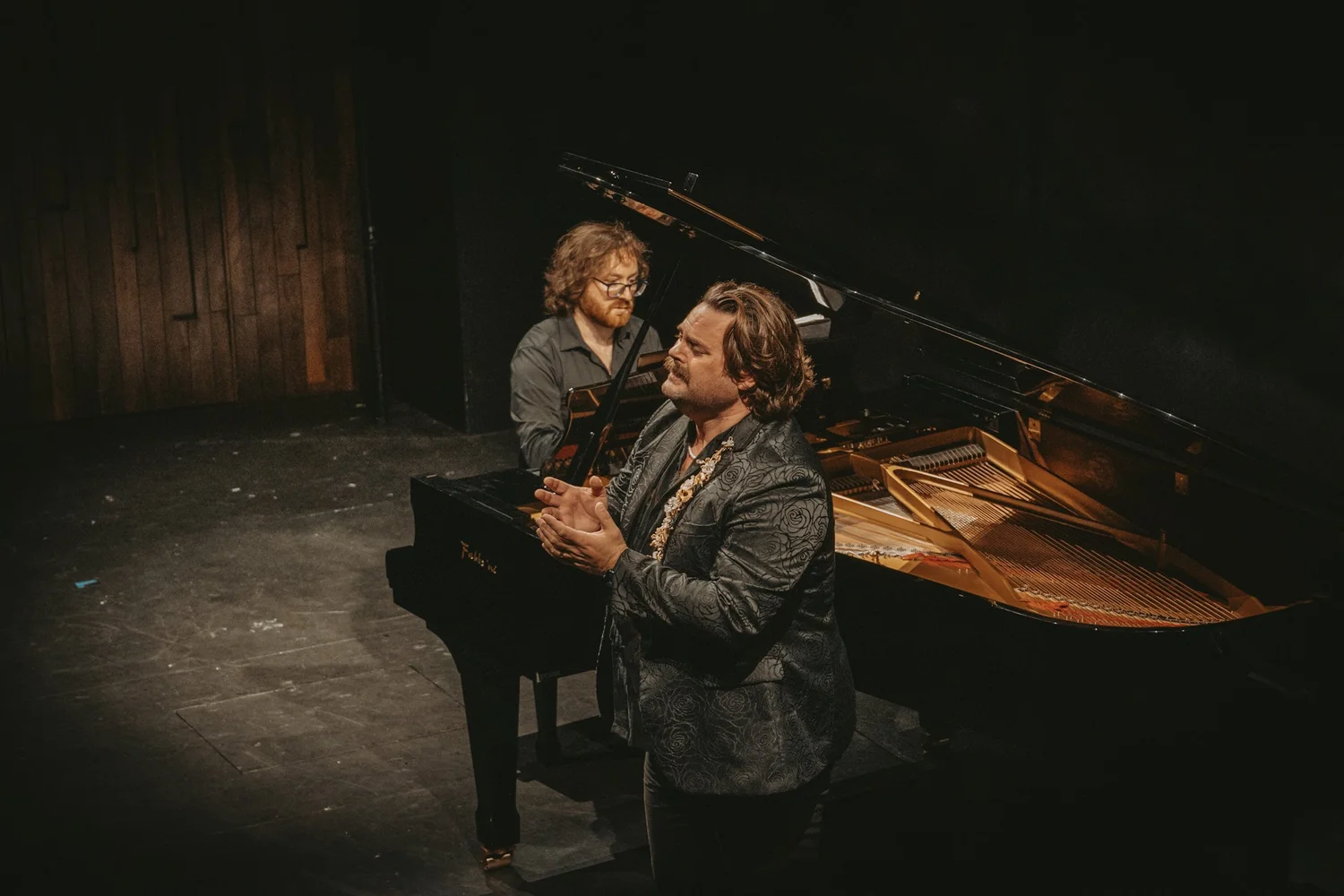
This past fall, I got the chance to make my professional international debut at the prestigious Wexford Festival Opera in Ireland. In addition to a role, I was asked to program and present a recital. I became obsessed with this recital. With whom would I collaborate? What would I program? Who is my audience? When would my recital fall? Where would it be? I did a lot of fantasizing and began playing around with the program: dream repertoire mixed with pieces I love to sing, mixed with music I’d heard before and always wanted to explore. These variables caused my Aquarian brain to become quite overwhelmed.
In the end, that Wexford recital became something far more personal than I expected. I found myself communicating with an audience of strangers from the mainstage of the National Opera House, unlocking stories I didn’t know I needed to tell in a way that only I could.
Now, OperaDelaware is giving me another chance to share this music. As a Company Artist, I’m excited that they trust me to say, “Here’s what I want to sing, and here’s why it matters.”
War, Memory, and Home
I started noticing that a lot of these pieces revolved around war, conflict, or separation. It’s not that I’m obsessed with war (I’m more of a Mario Party and Real Housewives guy, to be frank); I think I’m drawn to the tension in these stories: the longing for home, the uncertainty about the future, the heartbreak of losing what you love. That is the conflict. That is the universal experience.
And then there’s home, the big, overarching theme that ties everything together. Rachmaninoff’s “Ne poy, krasavitsa, pri mne” literally begs someone not to sing, because the songs of their homeland are too haunting and painful. As a traveling performer, I get that. My wife and dogs are my home; on the road, “home” can also become a dressing room, a coffee shop, or even an Airbnb with a decent kitchen. There’s a weird push-pull between wanting to be out there performing and missing the comfort of your own space. I think this song encapsulates that. (And the piano part, “singing” those sad songs of home, is absolutely stunning.)
Rachmaninoff and the Jolt of Spring
Next, I swing into “Spring Waters.” It’s like Rachmaninoff’s way of saying, “Okay, snap out of it. Here’s some energy and hope.” This song is the personification of cold, dark, long Russian winters bursting into spring. The piece is fast, bright, and flashy, especially for the pianist. It feels like the rush of possibility that follows a period of deep hopelessness and endless despair. (Hard relate.)

“When my loveliest pal, Dane, asked for a new folk song arrangement to premiere at the Wexford Festival Opera, I went on a deep dive of traditional tunes that might both fit the venue and complement the incredible lineup of pieces he had already curated for the recital. After some digging, The Whitby Lad seemed an ideal fit: something that dealt with the sorrow of displacement and a longing for home, and a song that, I thought, might also fit Dane’s commanding, affecting voice and penchant for emotional storytelling. Each corner of the song provided its own character, reaction, and new layer to the story. I’m grateful to both Dane and to the Wexford Festival Opera for helping this setting come to life. It was a treat to arrange, and I hope it’s a treat for you all to hear for the first time!”
Griffin Candey, composer
Friends Who Compose
Next up, two American premieres, both written for me: “The Whitby Lad” by Griffin Candey and “O Danny Boy” by Joel Balzun. Griffin and I go back to our grad school days; he was a tenor who also composed, and now he’s Dr. Candey, teaching composition at the university level. Joel, fratello mio, and I first met singing Rodolfo and Marcello opposite each other with Pacific Opera Project in LA. Joel is a baritone extraordinaire and also a brilliant voice teacher and composer. I wanted to showcase living American composers in my Wexford recital, and because of our long friendships and their own prowess as singer-composers, I knew I could trust them to create something beautiful.
- “The Whitby Lad” is all about longing and displacement. It resonates with the same tension of not quite being where you belong, but somehow forging ahead. Griffin’s arrangement unfolds with layers of character and emotion, and it quickly became a recital highlight for my pianist and me.
- “O Danny Boy” ties in my own Irish heritage. Joel’s arrangement, with a nod to Britten’s folk song arrangements, captures the bittersweet farewell and the deep hope that every goodbye carries the promise of a new hello.
I admit, I was nervous presenting “Danny Boy” to an Irish audience at Wexford, but they embraced it wholeheartedly. Sometimes you just have to trust that your authentic choices will resonate.
Verdi and the Big Feels

If you want drama, “O tu che in seno agli angeli” from Verdi’s La forza del destino is basically the gold standard. I’ve sung a lot of Verdi roles (Borsa and the Duke in Rigoletto, Bardolfo and Fenton in Falstaff, Alfredo in La traviata, Manrico in Il trovatore, Macduff in Macbeth, Un servo in Un giorno di regno, and next season my first Radamès in Aida!), but this aria is the tenor’s Mount Everest. It’s the perfect place to end the first half, because it’s basically Alvaro shouting, “My life is misery,” but in the most operatically gorgeous way possible.
Intermission and the Barber Reset
After a break (because we all need to breathe), I jump into Barber’s Despite and Still. Originally written for and dedicated to Barber’s muse, Leontyne Price, this cycle is a bit more modern, with jazzy twists and dissonances that reflect a rough period in Barber’s life. It’s about loneliness, lost love, and that sense of “I’m still here, so I guess I keep going.” It reminds me that sometimes beauty is found in the messiest parts of our lives. The set has extremely expressive imagery, with texts by James Joyce, Theodore Roethke, and Robert Graves.
“Bring Him Home”: The Title Track
Next up, the title track: “Bring Him Home” from Claude-Michel Schönberg’s Les Misérables. I titled the whole recital after it because it ties up so many of the themes: longing, care, and the idea of wanting to bring someone (or yourself) safely back to a place of belonging. After Barber’s emotional whirlwind, “Bring Him Home” feels like a prayerful pause, a moment to just breathe and hope.
“A Letter from Sullivan Ballou”
Oh my goodness, where do I start? This piece is exquisite. I first encountered it during a sort of communal YouTube sharing session during COVID. Written by John Kander for Renée Fleming, it’s based on a real Civil War letter from a soldier to his wife. The text is heartbreakingly beautiful: “Sarah, my love for you is deathless.” It speaks of the ties that bind us, even beyond life itself. Sometimes you discover a piece of music and realize it’s been waiting for you all along.
“Nessun dorma”
Because, honestly, how do you not end with Puccini’s iconic “Nessun dorma”? I’ve been singing this aria for years, and it’s grown with me. It’s the ultimate victory cry. Yes, it’s about conquering riddles and curses in the story, but symbolically, it’s a big “I got this” moment.
And That’s That
I’m beginning to realize the massive platform that artists have to effect change and to tell stories. As artists, we don’t have to wait for anyone else to tell us our voices are worth hearing. We can build something meaningful and share something that connects us more deeply with our audiences.
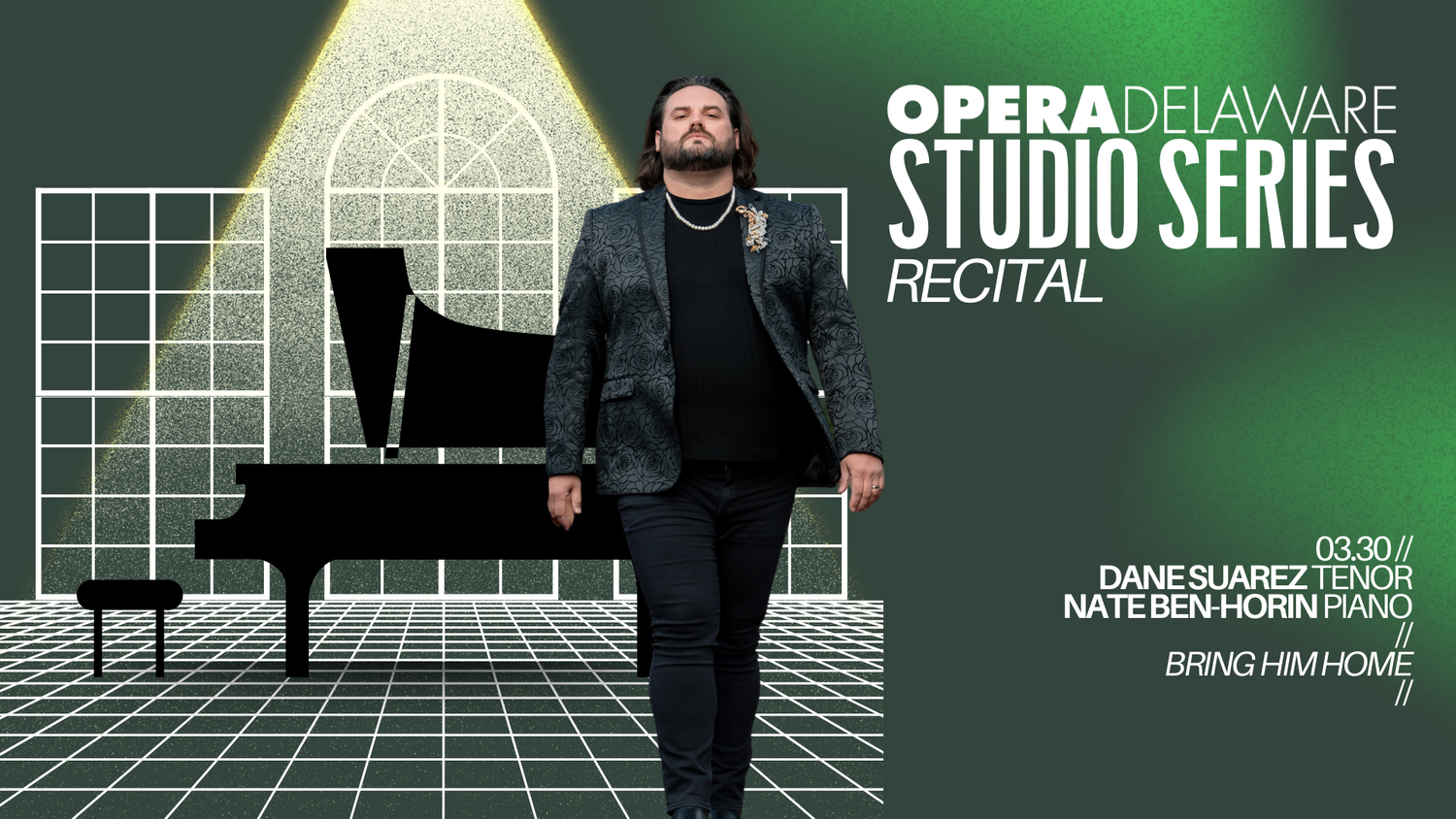
If any of this resonates with you, I hope you’ll come to my recital (Bring Him Home, March 30, 2:00 PM, OperaDelaware). Come and listen. Come and feel. Think deeply, or not at all. See you there.