Artwork by Dane Suarez
Music by Wolfgang Amadeus Mozart
Libretto by Lorenzo Da Ponte
Arrangement by Husan Chun-Novak
Produced in collaboration with Opera Baltimore and Mohican Hills Concert Series.
Don Giovanni Portraits was generously underwritten by Brad Clark.
In the intimacy of The OperaDelaware Studios, Don Giovanni Portraits wove together live performance, expert storytelling, and historical background to bring audiences closer than ever to the music and drama. Conductor Husan Chun-Novak led soloists and a chamber ensemble of two violins, viola, cello, clarinet, bassoon, and piano through highlights of Mozart’s electrifying score, a week before Don Giovanni opened at The Grand Opera House.

| Arranger and Conductor | Husan Chun-NovakRead bio |
| Violin I | Donna Grantham |
| Violin II | Melina Gajger |
| Viola | Nina Cottman |
| Cello | Larry Stomberg |
| Clarinet | Agnes Marchione |
| Bassoon | Eddie Sanders |
| Piano | Linda Henderson |
Before Don Giovanni took the stage at The Grand Opera House in October 2026, OperaDelaware invited audiences to meet him up close. Don Giovanni Portraits, which premiered at The OperaDelaware Studios, was an intimate new reduction of Mozart’s masterwork by Husan Chun-Novak and a chance to step inside the music before hearing it at full scale. This was Don Giovanni stripped to its essentials: no grand sets and no distance between the audience and the voices telling the story, only the score’s raw psychological power in a room built for closeness.
Mozart’s 1787 opera has held a singular place in the repertoire for more than two centuries, and Portraits showed why. It introduced Don Giovanni, the insatiable libertine who has spent a lifetime evading consequences, and Leporello, his servant and reluctant chronicler, who keeps a running tally of his master’s conquests in five countries. It introduced the women whose lives Giovanni has shattered: Donna Anna, seeking vengeance for an assault and her father’s murder; Donna Elvira, seduced and abandoned, arriving in a fury of wounded dignity; and Zerlina, a peasant girl who barely escapes becoming his next victim. In the reduced format, every confrontation landed with even sharper clarity.
Don Giovanni Portraits was both a standalone evening and an invitation: a way to live inside this music in miniature before meeting its full, supernatural reckoning on the mainstage, voice by voice and scene by scene, in the room where opera starts.
The opera opens with an assault. Don Giovanni, unrecognized in the dark, has tried to force himself on Donna Anna in her own home. Her father, the Commendatore, comes to defend her, and Giovanni kills him in a duel and escapes into the night. Finding her father’s body, Donna Anna makes her fiancé, Don Ottavio, swear to avenge him.
Giovanni’s pattern repeats almost at once. Donna Elvira, a woman he seduced and abandoned, arrives looking for him. Leporello hands her the opera’s most damning evidence: his master’s catalogue of conquests, 2,065 women in five countries, read out with the detachment of an inventory. Mozart sets the moment as comedy, and the joke is meant to sour as we listen.
At a village wedding, Giovanni sets his sights on the bride, Zerlina, and maneuvers the groom, Masetto, out of the way. Donna Elvira interrupts him, and then Donna Anna and Don Ottavio arrive and, without knowing it, ask the murderer himself to help them find the Commendatore’s killer. By the end of the act, the three women he has wronged confront him together and expose him in front of everyone. Once again, he talks his way out.
Giovanni trades clothes with Leporello so he can court Donna Elvira’s maid. Disguised as his master, Leporello is left to receive Elvira’s affection and later faces a mob that wants Giovanni dead. Masetto, who wanted only to protect his bride, is beaten and humiliated. When the people Giovanni has wronged corner Leporello, believing he is the Don, he barely escapes.
The supernatural arrives in a graveyard, where Giovanni mockingly invites the statue of the murdered Commendatore to dinner. The statue accepts. At the final banquet, Donna Elvira comes one last time, not for revenge but to beg him to change. He laughs at her. Then the statue arrives to keep its appointment and offers Giovanni one last chance to repent. He refuses, and a chorus of demons drags him to hell, unrepentant to the end.
The survivors announce their plans to marry, to mourn, and to move on, and close with a warning: this is how life ends for those who live as Don Giovanni lived.

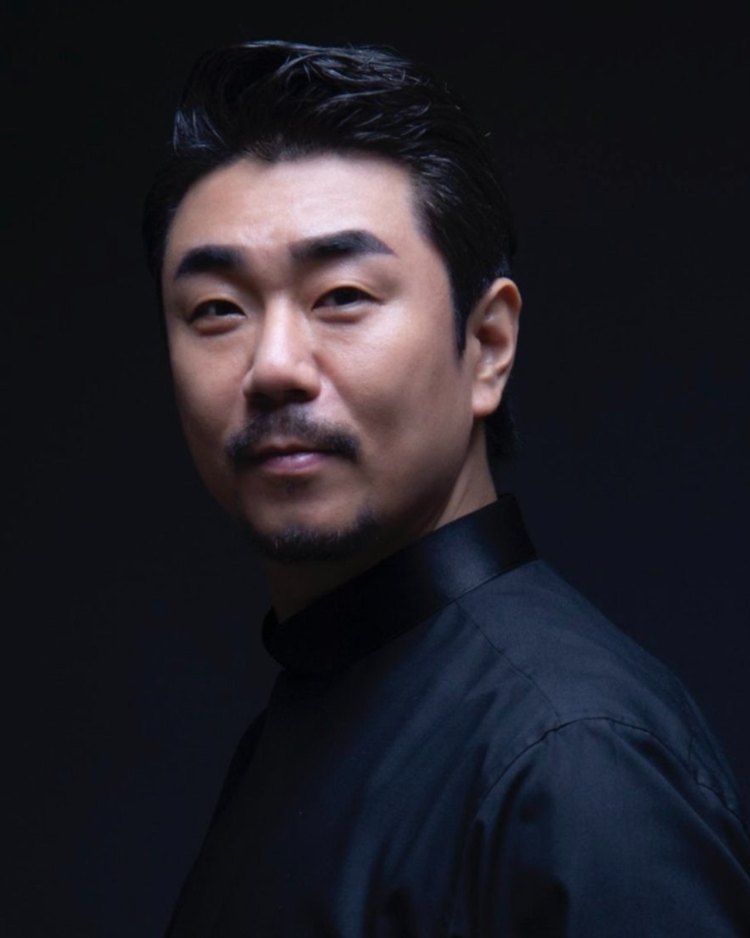
Don Giovanni in Don Giovanni Portraits; Masetto in Don Giovanni; Vidal in Fernanda; Melchior in Amahl and the Night Visitors; Guglielmo in Le Villi; Pluto in Jonathan Dove’s L’altra Euridice, Orpheus Retold
Baritone Gerard Moon has been praised by OperaWire as “a singer with authority and command and incredible stage presence” and by the Lexington Herald-Leader for his “strong voice, impeccable diction, and a huge sense of fun.” A native of South Korea, Moon is recognized for his rich, lyrical baritone and compelling dramatic presence.
Moon has studied and performed throughout the United States and internationally, with appearances in Italy, Austria, the Czech Republic, New Zealand, Australia, Brazil, and across Asia. He earned a Master of Music in Vocal Performance from the University of Kentucky, where he studied with Cynthia Lawrence, and went on to doctoral studies. His honors include the Alltech Vocal Scholarship, the National Society of Arts and Letters Award Scholarship, the Outstanding Graduate Music Student Award, and the Tom Getchell Scholarship.
A versatile singing actor, Moon has sung many of opera’s most demanding baritone roles, including Figaro (Il barbiere di Siviglia), Germont (La traviata), Ford (Falstaff), Don Giovanni and Leporello (Don Giovanni), the Count (Le nozze di Figaro), the title role in Rigoletto, Dr. Miracle and Coppélius (Les contes d’Hoffmann), Belcore (L’elisir d’amore), and Dr. Falke (Die Fledermaus).
As an OperaDelaware Company Artist, Moon has sung the Mandarin in Turandot (spring 2024), Schaunard in La bohème (fall 2024), Angelotti in Tosca (fall 2025), Gérard in Giordano’s Andrea Chénier (spring 2026), and Tonio in Pagliacci.
This season, he sings Don Giovanni in Don Giovanni Portraits, Masetto in Don Giovanni, Vidal in Fernanda, Melchior in Amahl and the Night Visitors, Guglielmo in Le Villi, and Jonathan Dove’s L’altra Euridice in Orpheus Retold.

Donna Anna in Don Giovanni Portraits

Donna Elvira in Don Giovanni Portraits

Don Ottavio in Don Giovanni Portraits

Leporello in Don Giovanni Portraits

Zerlina in Don Giovanni Portraits

Masetto in Don Giovanni Portraits
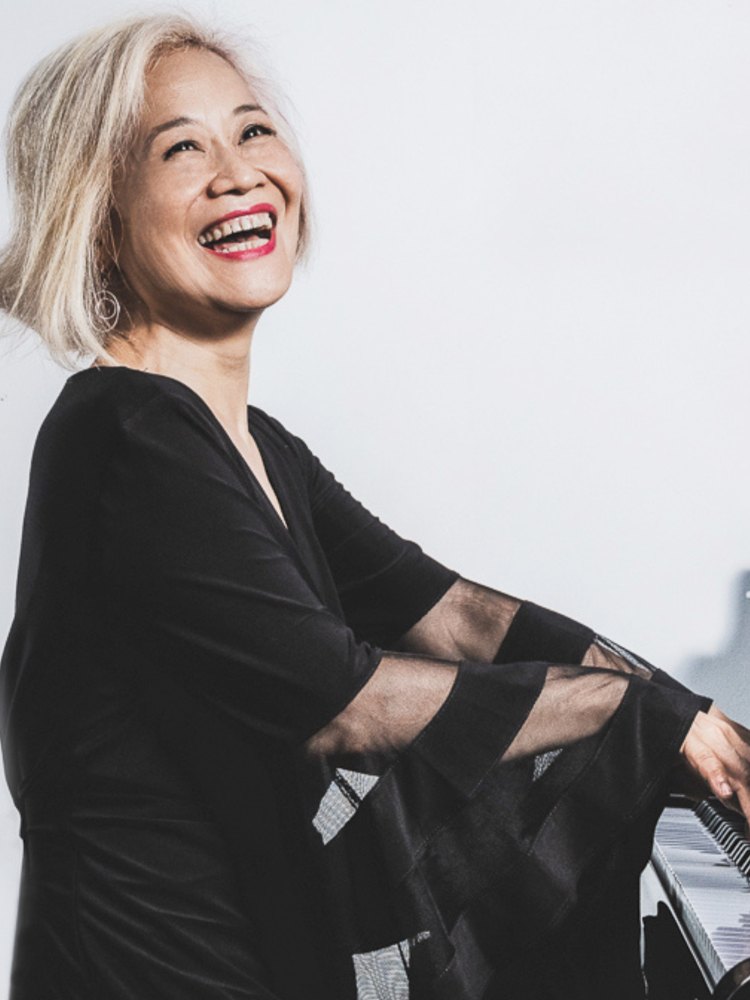
Arranger and Conductor
Husan Chun-Novak is a pianist and conductor who has worked for more than thirty years as an assistant conductor, opera pianist, and continuo player at major theaters and festivals in Europe, Asia, and the Americas. Her credits include the Theater an der Wien, the Mariinsky Theatre, Teatro Municipal de Santiago, Teatro de la Zarzuela, Palau de les Arts, and Maryland Lyric Opera, and she has worked with conductors including Riccardo Frizza and Speranza Scappucci and directors including Emilio Sagi and Calixto Bieito. As a recital pianist, she has performed at the Musikverein Wien and the Teatro Real in Madrid. A frequent collaborator with OperaDelaware and Opera Baltimore, she created Puccini Portraits in 2025, an arrangement of extended scenes and arias from Tosca, Madama Butterfly, and La fanciulla del West that was presented in Maryland and Delaware and repeated when OperaDelaware hosted the 2026 OPERA America Conference in Wilmington.