
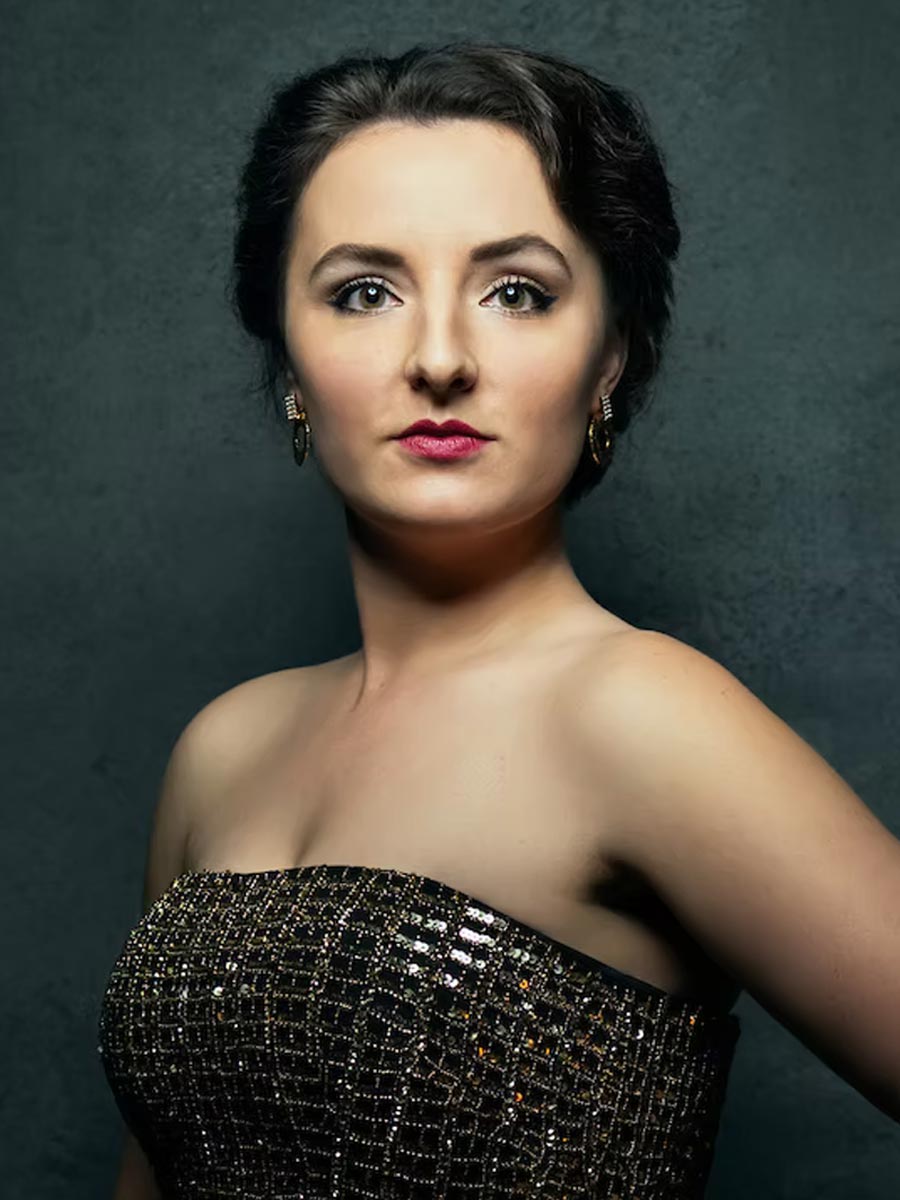

Emily Margevich, soprano
Carolina in Fernanda; Treble Trio in The Diary of One Who Vanished, Written in Secret; Anna in Le Villi; Stephanie in Jake Heggie’s To Hell and Back and Eurydice in Jodi Goble’s Eurydice (world premiere of a new version), Orpheus Retold; Eurydice in Orpheus and Eurydice
Emily Margevich is “a star in the making” (Bachtrack). One of the inaugural Company Artists in OperaDelaware’s groundbreaking employment model, this “poised and fearless prima donna” (Musical America) has been performing on stage since the age of two.
Read moreShow less
Be it opera, musical theater, or the Great American Songbook, Margevich delivers a performance “as passionate as any Taylor Swift epic” (TheaterMania). This “luminous soprano” (The Wall Street Journal) has “a voice of liquid beauty” (Opera Magazine) that is “big and luxurious, with a cascading quality, like a bolt of silk dropped from a balcony” (Parterre Box).
Emily starred as OperaDelaware’s Tosca in 2025, where her “gorgeous stage presence and voice... of amazing resonance... won the day” (Opera Today). The previous season, she made her OperaDelaware debut as Musetta in La bohème, and she has since sung Nedda in Pagliacci for the company. A graduate of the Academy of Vocal Arts, she sang Tatyana (Eugene Onegin), the Female Chorus (The Rape of Lucretia), Violetta (La traviata), and Musetta there. Her acclaimed Tatyana led to company debuts with Opera Baltimore and Heartbeat Opera, and she has appeared as Donna Elvira in Don Giovanni at the Music Academy of the West.
Behind the scenes, Emily is OperaDelaware’s Education and Community Engagement Manager, visiting schools to share opera in Wilmington, where she lives happily with the love of her life, bass-baritone Dylan Gregg.
This season, Emily makes her role and house debut as Rosalinde (Die Fledermaus) with Knoxville Opera. At OperaDelaware, she sings Carolina in Fernanda, Anna in Le Villi, and Eurydice in Orpheus and Eurydice, and she gives the world premiere of a new version of Jodi Goble’s Eurydice, a through-composed setting of Hilda Doolittle’s Imagist poem that gives voice to the silent Eurydice, created for her in Orpheus Retold.
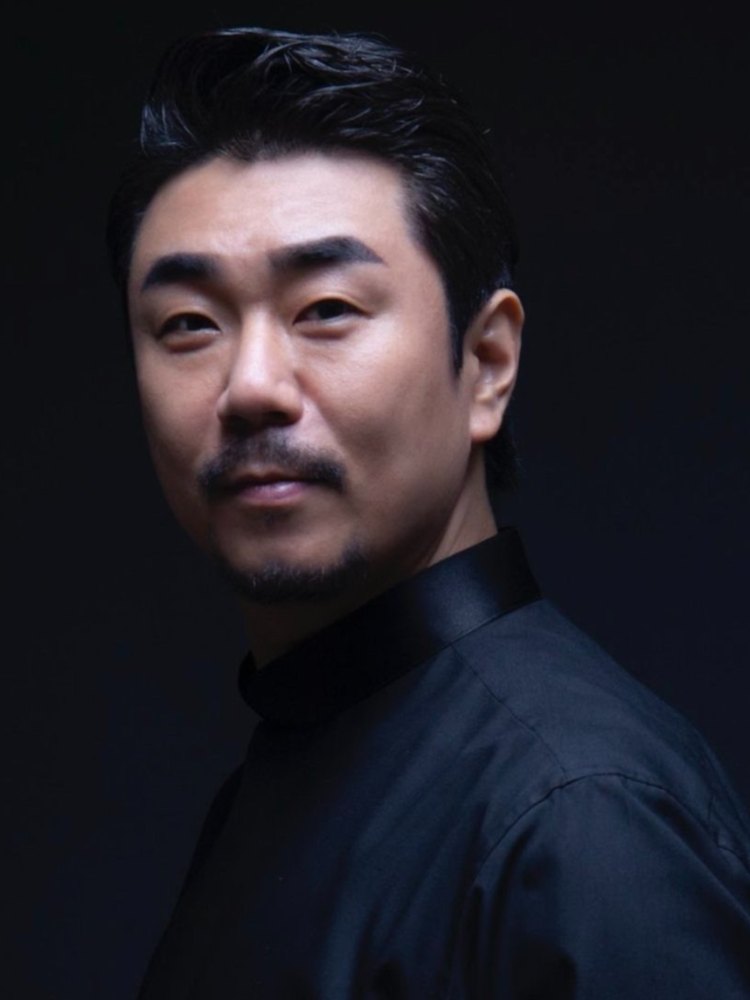
Dane Suarez, tenor
Javier in Fernanda; The Diary of One Who Vanished and Songs of Madness and Sorrow in Written in Secret; Roberto in Le Villi
Praised by Opera Today as “simply everything one could wish for,” American dramatic tenor Dane Suarez has built a career at the center of the Italian spinto and verismo repertoire. Opera Today has described his voice as “uncommonly poised” and “gleaming,” equally capable of powerful impact and melting nuance, and has called him “destined to become a tenor of choice” in the most demanding roles of his Fach.
Read moreShow less
The 2024-25 season brought his international debut at Ireland’s Wexford Festival Opera as Don Ferolo Whiskerandos in Charles Villiers Stanford’s The Critic, a return to his signature Don José (Carmen) with Opera Memphis, and his debut with the Erie Philharmonic as tenor soloist in Verdi’s Requiem. He also originated two roles in Llantos 1492, a world premiere flamenco opera, with Opera Southwest. The 2025-26 season brought three major role debuts: the title role in Andrea Chénier with OperaDelaware, Radamès in Aida with Opera Southwest, and Giovanni in La hija de Rappaccini with Opera Columbus.
This season, he makes role debuts as Dick Johnson in La fanciulla del West with Opera Columbus and Ulises in Salsipuedes with Opera Southwest. He makes his debut with Opera Română Craiova as Cavaradossi (Tosca) and Manrico (Il trovatore) and with Opera Las Vegas as Radamès (Aida), returns to Rodolfo (La bohème) with the Pennsylvania Sinfonia Orchestra, and sings the tenor solos in Messiah with the Sioux City Symphony. At OperaDelaware, he sings Javier in Fernanda and Roberto in Le Villi, both role debuts, and takes on two monodramas for tenor in Written in Secret: Janáček’s The Diary of One Who Vanished and Daron Hagen’s Songs of Madness and Sorrow.
Beyond opera, Suarez made his Off-Broadway debut in the world premiere of the play Montag at Soho Rep. He is a grant recipient of The Olga Forrai Foundation, which supports emerging dramatic voices. He is also OperaDelaware’s Marketing Manager, and he lives in Wilmington with his wife, Kerriann Otaño, and their two perfect pups.

Gerard Moon, baritone
Don Giovanni in Don Giovanni Portraits; Masetto in Don Giovanni; Vidal in Fernanda; Melchior in Amahl and the Night Visitors; Guglielmo in Le Villi; Pluto in Jonathan Dove’s L’altra Euridice, Orpheus Retold
Baritone Gerard Moon has been praised by OperaWire as “a singer with authority and command and incredible stage presence” and by the Lexington Herald-Leader for his “strong voice, impeccable diction, and a huge sense of fun.” A native of South Korea, Moon is recognized for his rich, lyrical baritone and compelling dramatic presence.
Read moreShow less
Moon has studied and performed throughout the United States and internationally, with appearances in Italy, Austria, the Czech Republic, New Zealand, Australia, Brazil, and across Asia. He earned a Master of Music in Vocal Performance from the University of Kentucky, where he studied with Cynthia Lawrence, and went on to doctoral studies. His honors include the Alltech Vocal Scholarship, the National Society of Arts and Letters Award Scholarship, the Outstanding Graduate Music Student Award, and the Tom Getchell Scholarship.
A versatile singing actor, Moon has sung many of opera’s most demanding baritone roles, including Figaro (Il barbiere di Siviglia), Germont (La traviata), Ford (Falstaff), Don Giovanni and Leporello (Don Giovanni), the Count (Le nozze di Figaro), the title role in Rigoletto, Dr. Miracle and Coppélius (Les contes d’Hoffmann), Belcore (L’elisir d’amore), and Dr. Falke (Die Fledermaus).
As an OperaDelaware Company Artist, Moon has sung the Mandarin in Turandot (spring 2024), Schaunard in La bohème (fall 2024), Angelotti in Tosca (fall 2025), Gérard in Giordano’s Andrea Chénier (spring 2026), and Tonio in Pagliacci.
This season, he sings Don Giovanni in Don Giovanni Portraits, Masetto in Don Giovanni, Vidal in Fernanda, Melchior in Amahl and the Night Visitors, Guglielmo in Le Villi, and Jonathan Dove’s L’altra Euridice in Orpheus Retold.
Katherine M. Carter
Stage Director
Katherine M. Carter is a New York-based stage director of opera and theater whose work spans major houses, young artist programs, and boundary-pushing new work across the country. Recent credits include a new staging of Verdi’s Nabucco for the Canadian Opera Company, a new production of Dialogues des Carmélites for Wolf Trap Opera, and engagements with San Francisco Opera, Houston Grand Opera, and The Metropolitan Opera. Frequently in demand for her consent-based and community-based approach to rehearsal, Carter brings expertise across a wide range of mediums and has worked with the Ryan Opera Center at Lyric Opera of Chicago, Santa Fe Opera, Manhattan School of Music, The Juilliard School, and On Site Opera, among many others. She is a certified Intimacy Director through IDC Professionals and co-founder of The MITTEN Lab, a residency for emerging theater artists in northern Michigan. Written in Secret marks her OperaDelaware debut.