



Music by Christoph Willibald Gluck
Libretto by Ranieri de’ Calzabigi
Produced in partnership with First State Ballet Theatre.
The myth of Orpheus and Eurydice asks whether love is strong enough to conquer death. Gluck’s retelling of the Greek tragedy joins music and dance, and it cuts to the raw emotion of a man overcome by loss, who descends into Hell for love only to lose everything in a single moment. Can love overcome fate and reunite these mythic lovers?
OperaDelaware and First State Ballet Theatre bring Orpheus and Eurydice to The Grand Opera House on May 21 and 23, 2027.

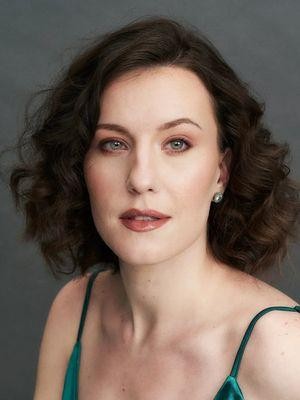
Previous OperaDelaware productions: title role, Tosca; Musetta, La bohème; Nedda, Pagliacci; Charlene, Service Provider

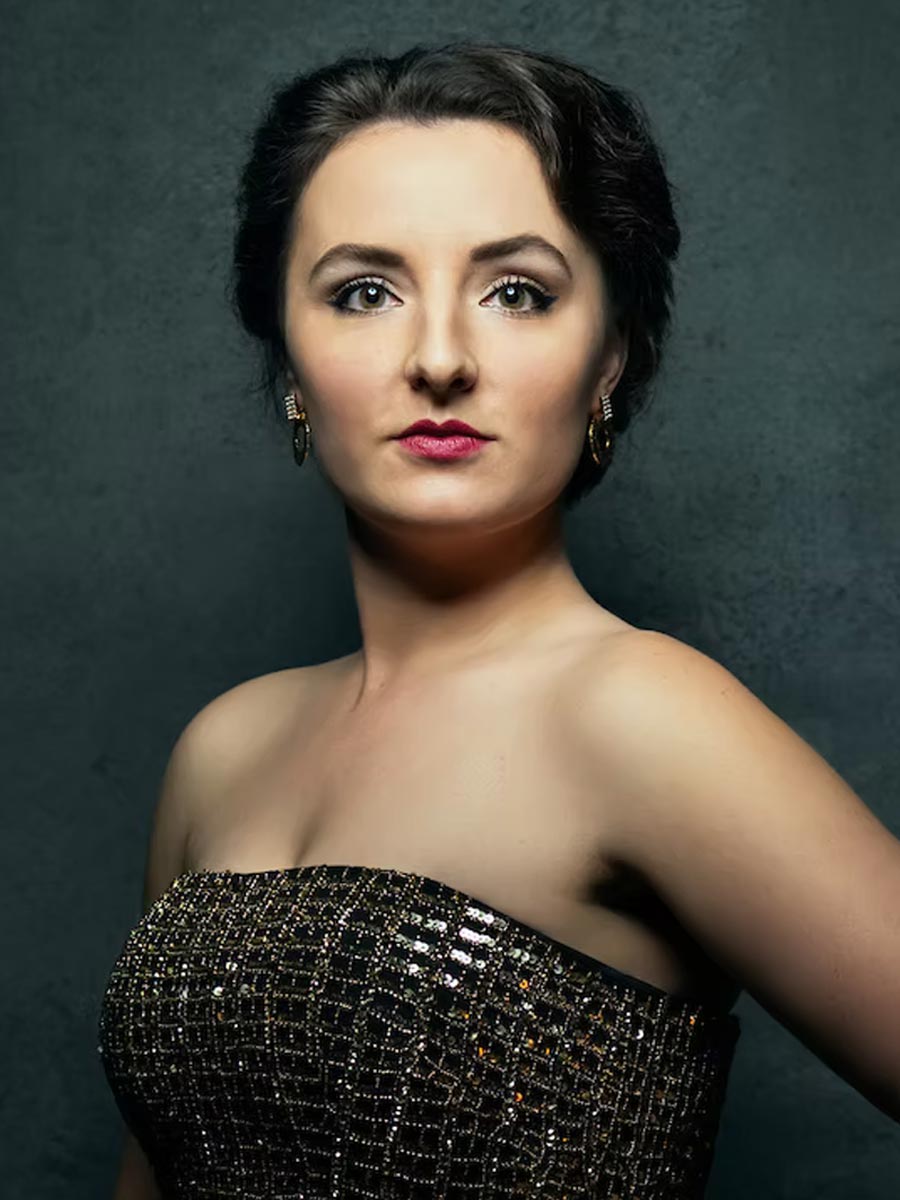
Previous OperaDelaware production: Ruth Bader Ginsburg, Scalia/Ginsburg


| Costume Designer | Sarah Bahr |
| Lighting Designer | Tláloc López-Watermann |
| Wig and Makeup Designer | Brittany Rappise |
| Prop Designer, Production Assistant | Chelsea Dean |
| Chorus Master | George Hemcher |
| Production Stage Manager | Gina Hays |
Gluck’s Orpheus and Eurydice, with a libretto by Ranieri de’ Calzabigi, premiered in Vienna in 1762. It broke with the operatic style of its day, trading vocal display for direct, vulnerable singing and weaving dance through the whole work. Gluck called it an azione teatrale, a theatrical action, and the label fits: this is not an opera about spectacle. It is a human story about what a person will do for love, and what love costs.
The opera opens with Orpheus, a poet and musician of supernatural gifts, standing at the tomb of his wife, Eurydice. He does not announce himself with a grand aria. Over a chorus of mourners he sings a single word, three times: Eurydice. Eurydice. Eurydice. This is a man who has lost everything.
Moved by his grief, Amore, the god of Love, makes him an offer. Orpheus may descend into the Underworld and bring his wife back, but he must not look at her until they reach the world of the living. He must lead her out of Hell in silence, with no explanation, no reassurance, and no glance to confirm she is there. He must trust Love, and Eurydice must trust him. The cruelty of the story is that trust alone may not be enough.
At the gates of the Underworld, the Furies block his path, and Orpheus does what only he can do. He sings. His lyre, heard in the orchestra as a shimmering harp, softens the immovable Furies, and they let him pass. He enters the Elysian Fields, radiant and serene, but finds no comfort in their beauty, because Eurydice is not yet beside him.
Once the two are reunited, the climb back to the living world begins. Eurydice knows nothing of Amore’s conditions and takes Orpheus’s refusal to look at her as proof that he no longer loves her. They are near enough to touch, yet held apart by the cruel demands of fate.
Eurydice’s grave. Nymphs and shepherds mourn Eurydice, who has died of a snakebite (“Ah, se intorno a quest’urna funesta”). Left alone, Orpheus, her husband, adds his voice to the rites (“Chiamo il mio ben così”). Only Echo answers. Orpheus vows to bring Eurydice back from the Underworld (“Numi! barbari numi”).
Amore, god of love, appears with word that Jove, pitying Orpheus, will let him descend into the land of the dead to bring Eurydice back. To make the trial harder, Orpheus must not look at Eurydice or explain why looking is forbidden, or he will lose her forever (“Gli sguardi trattieni”). Orpheus agrees and sets out.
The gates of Hades. Furies and ghosts try to bar Orpheus from the Underworld (“Chi mai dell’Erebo”). His pleading softens and calms them, and at last they let him pass into the Elysian Fields.
Elysium. Orpheus is moved by the beauty around him (“Che puro ciel”). Heroes and heroines bring Eurydice to him (“Torna, o bella, al tuo consorte”). Without looking at her, he leads her away.
A dark labyrinth. Orpheus leads Eurydice toward the upper world, forbidden to look at her (“Vieni, segui i miei passi”). She cannot understand his silence, and he cannot explain it (“Vieni, appaga il tuo consorte”). Eurydice despairs at the thought of a life without his love (“Che fiero momento”). In desperation, Orpheus turns to her, and she dies again. Grief-stricken, he asks how he can live without her (“Che farò senza Euridice?”) and resolves to kill himself. Amore appears and stops his hand. Moved by Orpheus’s love and devotion, Amore restores Eurydice to life, and the three return to Earth.
The Temple of Love. Orpheus, Eurydice, Amore, the nymphs, and the shepherds celebrate the power of love (“Trionfi Amore”).

Carolina in Fernanda; Treble Trio in The Diary of One Who Vanished, Written in Secret; Anna in Le Villi; Stephanie in Jake Heggie’s To Hell and Back and Eurydice in Jodi Goble’s Eurydice (world premiere of a new version), Orpheus Retold; Eurydice in Orpheus and Eurydice
Emily Margevich is “a star in the making” (Bachtrack). One of the inaugural Company Artists in OperaDelaware’s groundbreaking employment model, this “poised and fearless prima donna” (Musical America) has been performing on stage since the age of two.
Be it opera, musical theater, or the Great American Songbook, Margevich delivers a performance “as passionate as any Taylor Swift epic” (TheaterMania). This “luminous soprano” (The Wall Street Journal) has “a voice of liquid beauty” (Opera Magazine) that is “big and luxurious, with a cascading quality, like a bolt of silk dropped from a balcony” (Parterre Box).
Emily starred as OperaDelaware’s Tosca in 2025, where her “gorgeous stage presence and voice... of amazing resonance... won the day” (Opera Today). The previous season, she made her OperaDelaware debut as Musetta in La bohème, and she has since sung Nedda in Pagliacci for the company. A graduate of the Academy of Vocal Arts, she sang Tatyana (Eugene Onegin), the Female Chorus (The Rape of Lucretia), Violetta (La traviata), and Musetta there. Her acclaimed Tatyana led to company debuts with Opera Baltimore and Heartbeat Opera, and she has appeared as Donna Elvira in Don Giovanni at the Music Academy of the West.
Behind the scenes, Emily is OperaDelaware’s Education and Community Engagement Manager, visiting schools to share opera in Wilmington, where she lives happily with the love of her life, bass-baritone Dylan Gregg.
This season, Emily makes her role and house debut as Rosalinde (Die Fledermaus) with Knoxville Opera. At OperaDelaware, she sings Carolina in Fernanda, Anna in Le Villi, and Eurydice in Orpheus and Eurydice, and she gives the world premiere of a new version of Jodi Goble’s Eurydice, a through-composed setting of Hilda Doolittle’s Imagist poem that gives voice to the silent Eurydice, created for her in Orpheus Retold.