2025-26 Season
OperaDelaware’s 2025-26 season, Passion in the Face of Power, was a searing tribute to art as resistance and to the role of artists in revolution.
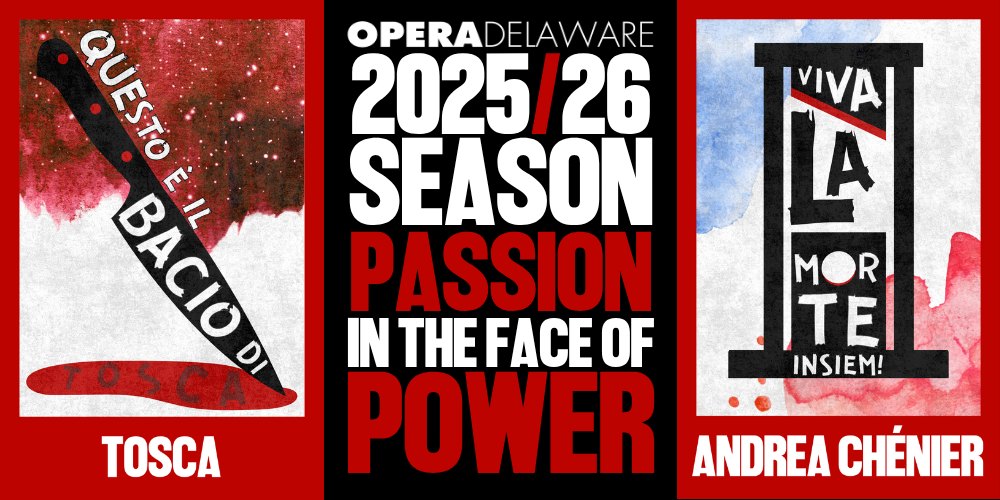
On the mainstage at The Grand Opera House, two towering masterpieces showed how artists challenge injustice. Puccini’s Tosca, presented with Opera Baltimore, told the story of a passionate artist caught in a brutal regime. Giordano’s Andrea Chénier, a company premiere, followed a poet whose words ignite hearts and threaten tyrants during the French Revolution, and its performances coincided with the 2026 OPERA America Conference, which OperaDelaware hosted in Wilmington.
The Studio Series at The OperaDelaware Studios explored opera in intimate, unexpected ways, from iconic arias to boundary-pushing new works: Puccini Portraits, OperaDEathmatch, the double bill Service Provider and Pagliacci, and Stayin’ Alive, a night at the opera where nobody dies. In December 2025, OperaDelaware also gave holiday concerts at the Schwartz Center for the Arts in Dover and at Winterthur.
The season closed with two summer events: Parking Lot Pagliacci, an outdoor, one-hour Pagliacci in July 2026, and Joseph and the Amazing Technicolor Dreamcoat, the August 2026 youth production of OperaDelaware’s tuition-free Summer Rock Opera program.

- Puccini PortraitsSeptember 12 and 14, 2025
- ToscaOctober 17 and 19, 2025
- OperaDEathmatchNovember 21 and 23, 2025
- Holiday concertsDecember 18 and 20, 2025
- Service Provider and PagliacciJanuary 23 and 25, 2026
- Stayin’ AliveMarch 27 and 29, 2026
- Andrea ChénierMay 10, 13, and 15, 2026
- Parking Lot PagliacciJuly 16, 2026
- Joseph and the Amazing Technicolor DreamcoatAugust 15 and 16, 2026
Puccini Portraits
September 12 and 14, 2025
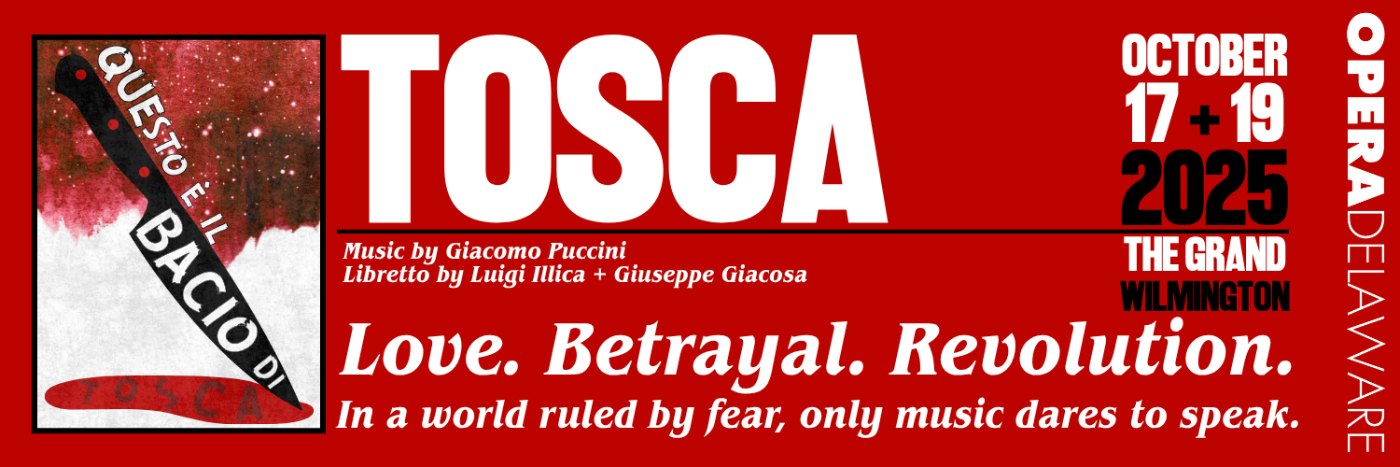
Tosca
Tosca
Music by Giacomo Puccini
Libretto by Luigi Illica and Giuseppe Giacosa
October 17 and 19, 2025
The Grand Opera House, Wilmington
A co-production with Opera Baltimore, which also performed it October 10 and 12, 2025, at Towson University
Tosca stormed the stage of The Grand Opera House with passion, power, and Puccini’s heart-stopping music. It was the opera’s first OperaDelaware production since 2010, and Company Artist Emily Margevich made her role debut as Floria Tosca.
Set against the political unrest of Rome in 1800, Tosca is a white-hot thriller of love, betrayal, and resistance. When the celebrated singer Floria Tosca is caught in the cruel schemes of the corrupt chief of police, Baron Scarpia, she faces an impossible choice: save her beloved Mario Cavaradossi or keep her integrity. What follows is a riveting descent into sacrifice and vengeance, ending in one of the most unforgettable finales in opera.
With sweeping verismo melodies and a lush, full orchestra, Puccini’s score delivers some of opera’s most iconic moments, from the aching beauty of “Vissi d’arte” to the soaring cries of doomed love. At the heart of it all is Tosca herself: bold, brilliant, and unyielding, a woman who dares to fight back in a world ruled by men.
“Vissi d’arte is the lesson, and vissi d’amore is the purpose,” Margevich said of the aria while preparing the role. Stage director Haley Stamats pointed out how fast it all happens: the opera begins on the afternoon of June 17, 1800, and ends at dawn the next day.
Synopsis
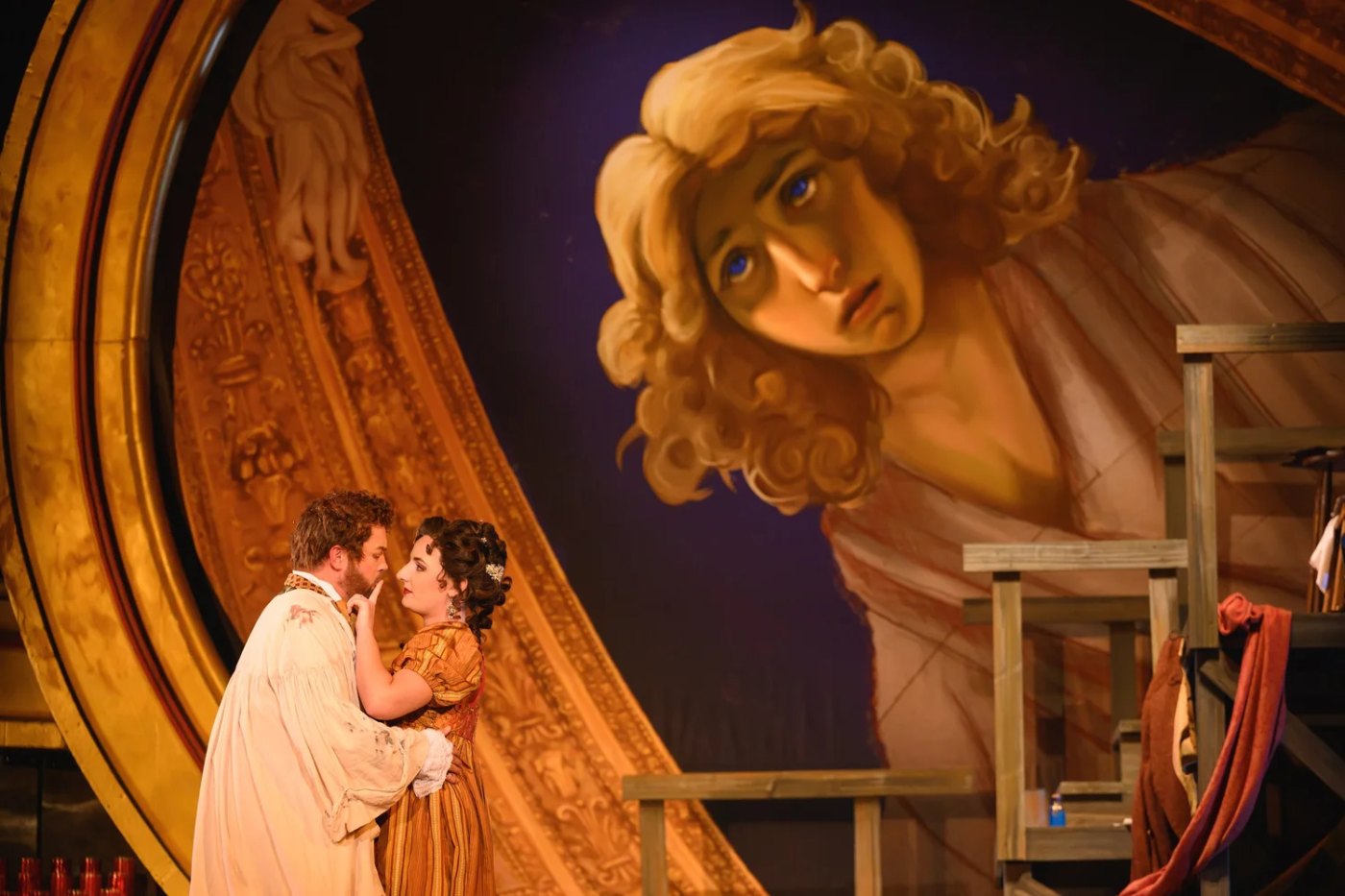
Rome, June 1800. Cesare Angelotti, a political prisoner, has escaped from the Castel Sant’Angelo and hides in his family’s chapel. He is discovered by the painter Mario Cavaradossi, who is at work on a fresco of Mary Magdalene. Cavaradossi has modeled the Magdalene on a woman he has seen praying in the church: Angelotti’s sister, the Marchesa Attavanti, who has left a disguise in the chapel for her brother’s escape. Cavaradossi, a fellow revolutionary, does not hesitate to help.
When the singer Floria Tosca, Cavaradossi’s lover, arrives, she recognizes the Marchesa in the painting and grows suspicious and jealous. Cavaradossi reassures her of his devotion and sends her away so he can help Angelotti. Cannon fire announces that the escape has been discovered, and Cavaradossi hurries Angelotti to his villa.
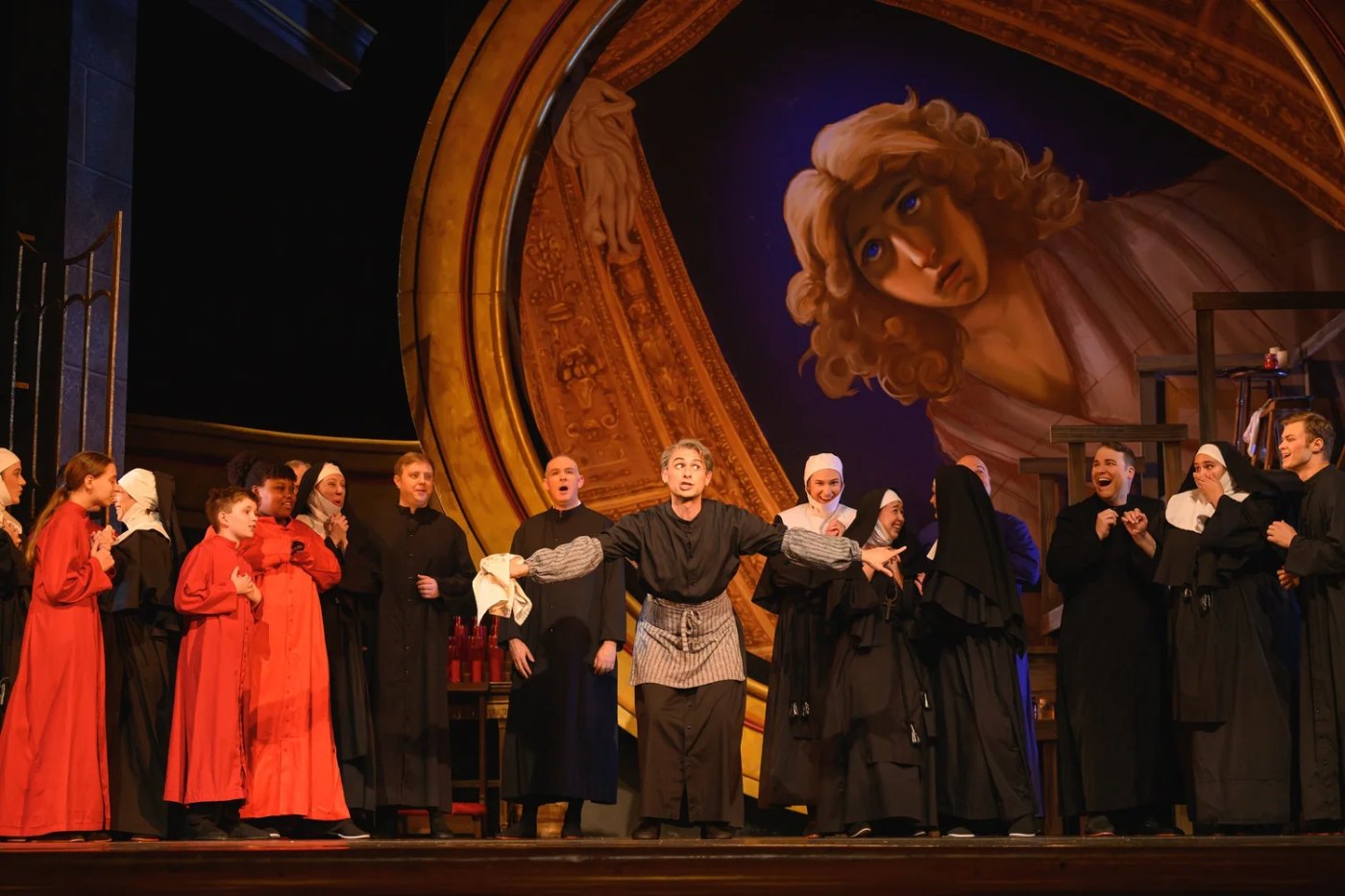
The sacristan and the choir gather to celebrate news of Napoleon’s apparent defeat, but their joy is cut short by Baron Scarpia, the feared and corrupt chief of police. Searching for Angelotti, Scarpia finds evidence that Cavaradossi has helped him. When Tosca returns, Scarpia plays on her jealousy and plants the idea that Cavaradossi is hiding another woman. Enraged, Tosca leaves, trailed by Scarpia’s men, and Scarpia declares his two aims: to capture Angelotti and to possess Tosca.
That evening, Scarpia dines alone while music drifts up from the palace below. His agent reports that Angelotti is still at large but Cavaradossi has been arrested. Brought before Scarpia, Cavaradossi denies knowing where Angelotti is, and Scarpia has him tortured. Tosca, summoned by Scarpia, hears her lover’s cries and cannot bear it: she reveals Angelotti’s hiding place. Cavaradossi is dragged back in, bloodied and furious at her betrayal.
News arrives that Napoleon has won a decisive victory at the Battle of Marengo, and Cavaradossi’s defiance flares. Scarpia orders his execution at dawn. Alone with Tosca, he offers his cruel bargain: if she gives herself to him, Cavaradossi will be spared. Tosca resists until, in desperation, she agrees. Scarpia arranges what he calls a mock execution, with orders for the firing squad to fire blanks. When he moves to claim his prize, Tosca stabs him with a knife from his dinner table. Before leaving, Tosca, a woman of faith, turns back, places candles beside Scarpia’s body, and lays a crucifix on his chest.
Just before dawn, Cavaradossi awaits execution. He writes a farewell letter to Tosca, remembering their happiness together. Tosca arrives, radiant with hope, and tells him that she has killed Scarpia and that the firing squad will only pretend to shoot. The lovers imagine a future of freedom and joy.
At dawn, the soldiers fire. Cavaradossi falls, and Tosca rushes to him, only to realize with horror that the bullets were real: Scarpia has deceived her even in death. As soldiers close in, Tosca leaps from the battlements, crying that she will meet Scarpia before God.
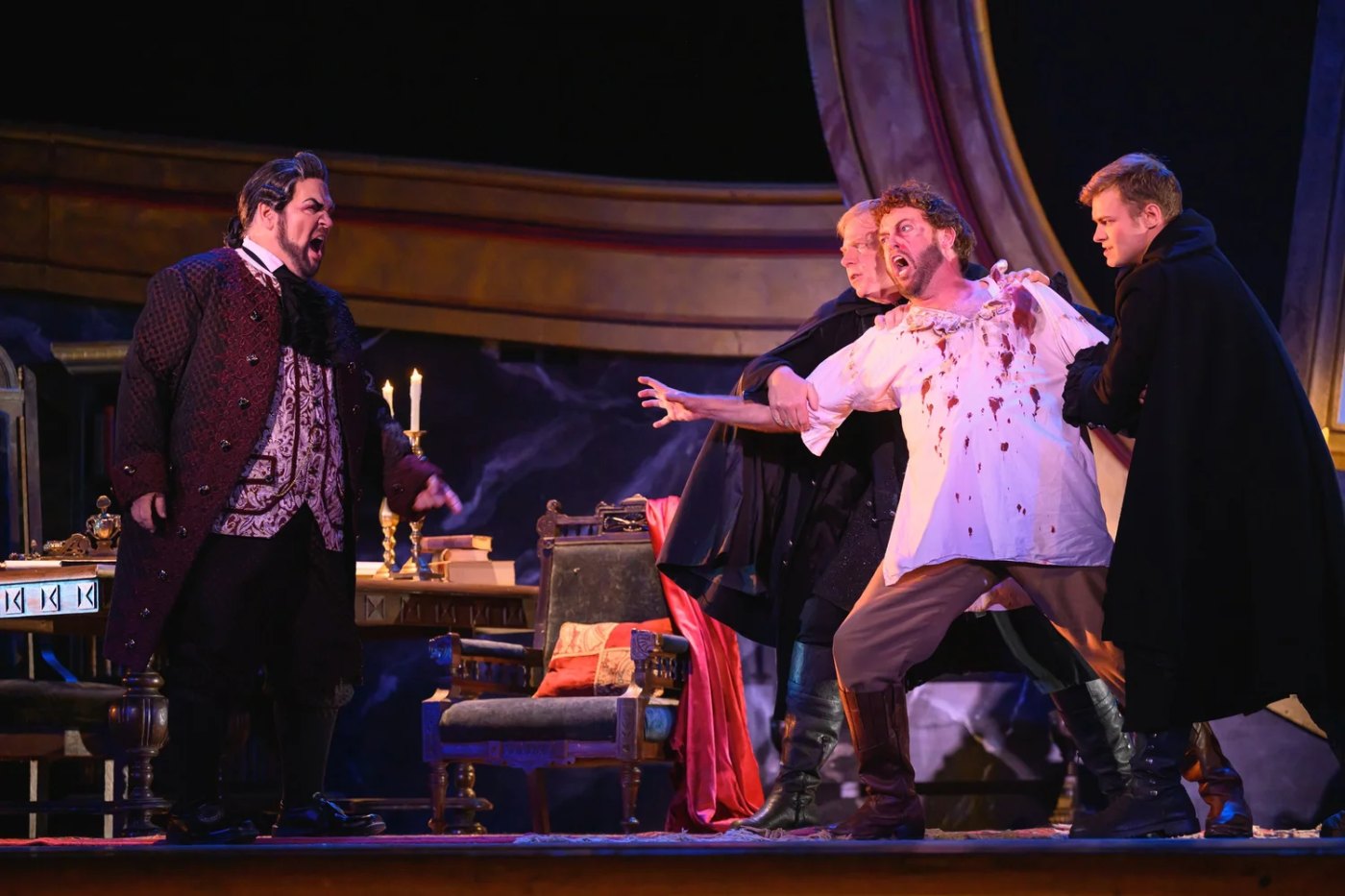
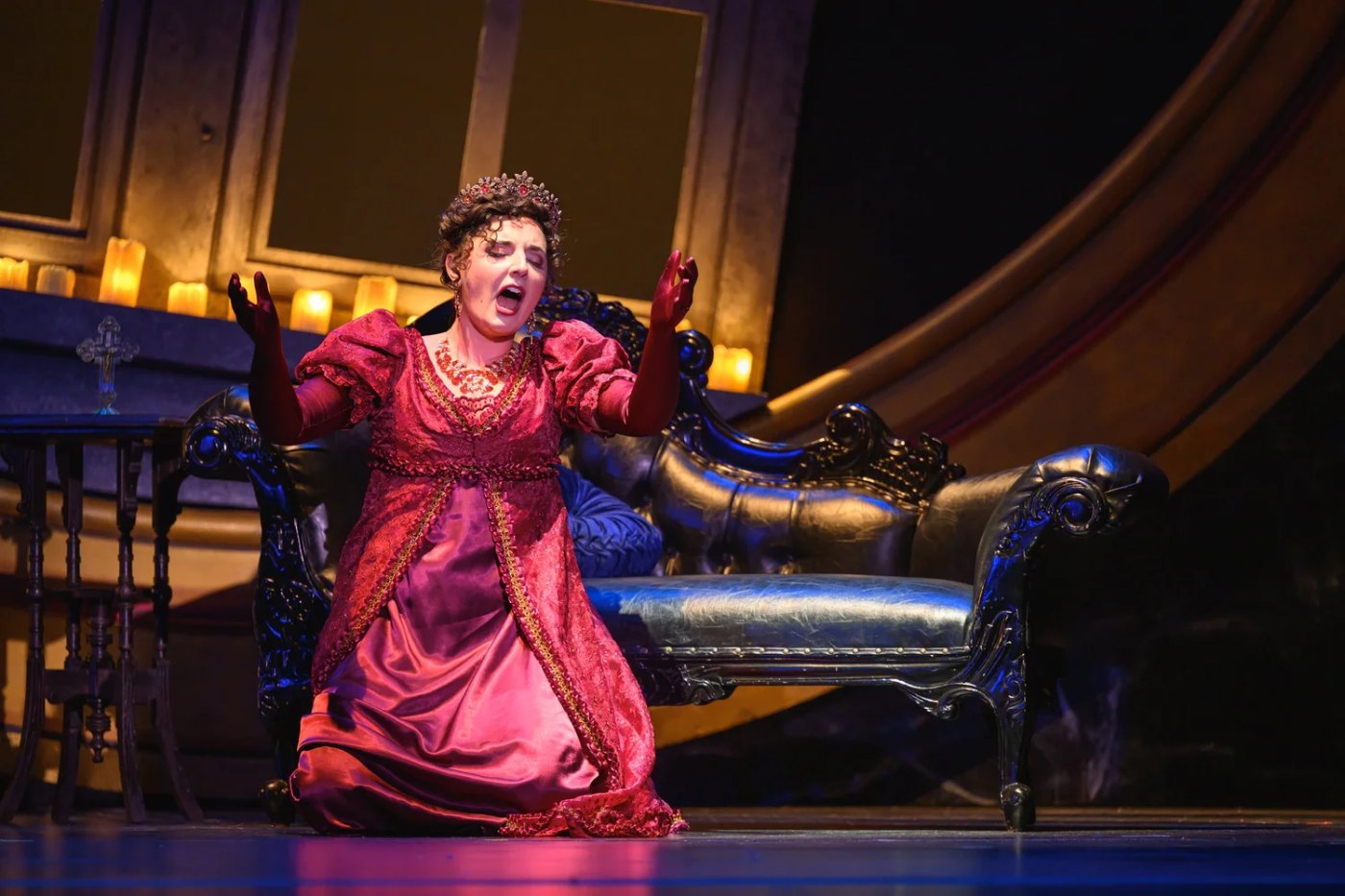
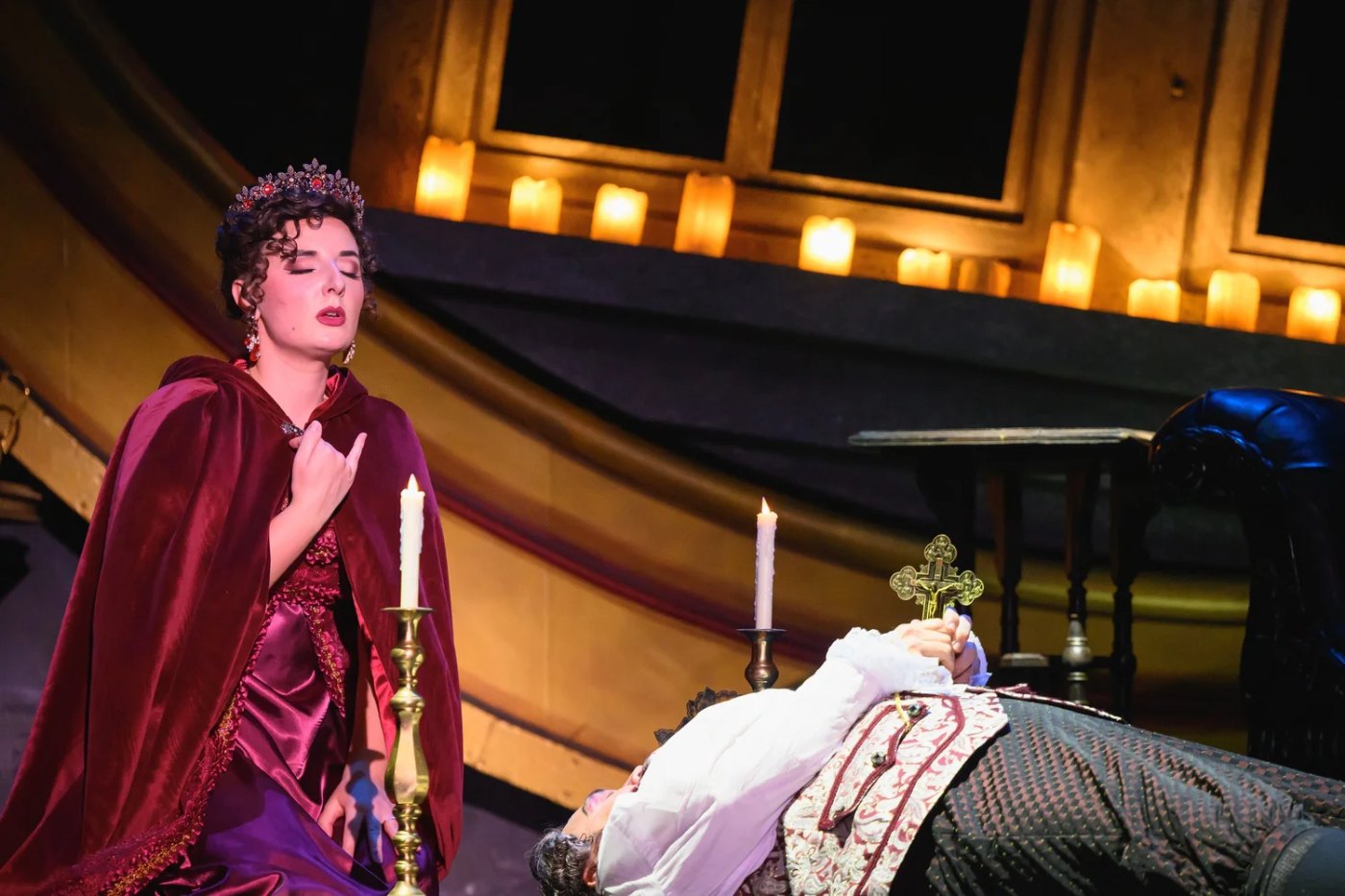

Cast
- Emily Margevich*Floria Tosca
- John PickleMario Cavaradossi
- Steven CondyBaron Scarpia
- Gerard Moon*Cesare Angelotti
- Brian James MyerSacristan
- Malcolm RichardsonSpoletta
- Ben Isaac RossSciarrone
- Dante DoganieroJailer
*OperaDelaware Company Artist
Creative and production team
Creative
| Stage Director | Haley Stamats |
| Conductor | Domenico Boyagian |
| Scenic Designer | John Raley |
| Lighting Designer | Tláloc López-Watermann |
| Associate Lighting Designer | Elijah Thomas |
| Hair and Makeup Designer, Costume Coordinator | Brittany Rappise |
| Scenic Artist | Erica Harney |
| Props Coordinator | Chelsea Dean |
Music staff
| Chorus Master | George Hemcher |
| Rehearsal Pianist | Husan Chun-Novak |
Production
| Production Manager | Grace Brega |
| Production Stage Manager | Jenna Jacobson |
| Assistant Stage Manager | Hannah Hannon |
Watch and listen
Opera Insights: Tosca, free lectures from Opera Baltimore: Part 1 and Lecture 2 with Dr. Aaron Ziegel, and Lecture 3: A Singer’s View with Mary Elizabeth Williams (Opera Baltimore YouTube channel)
Press
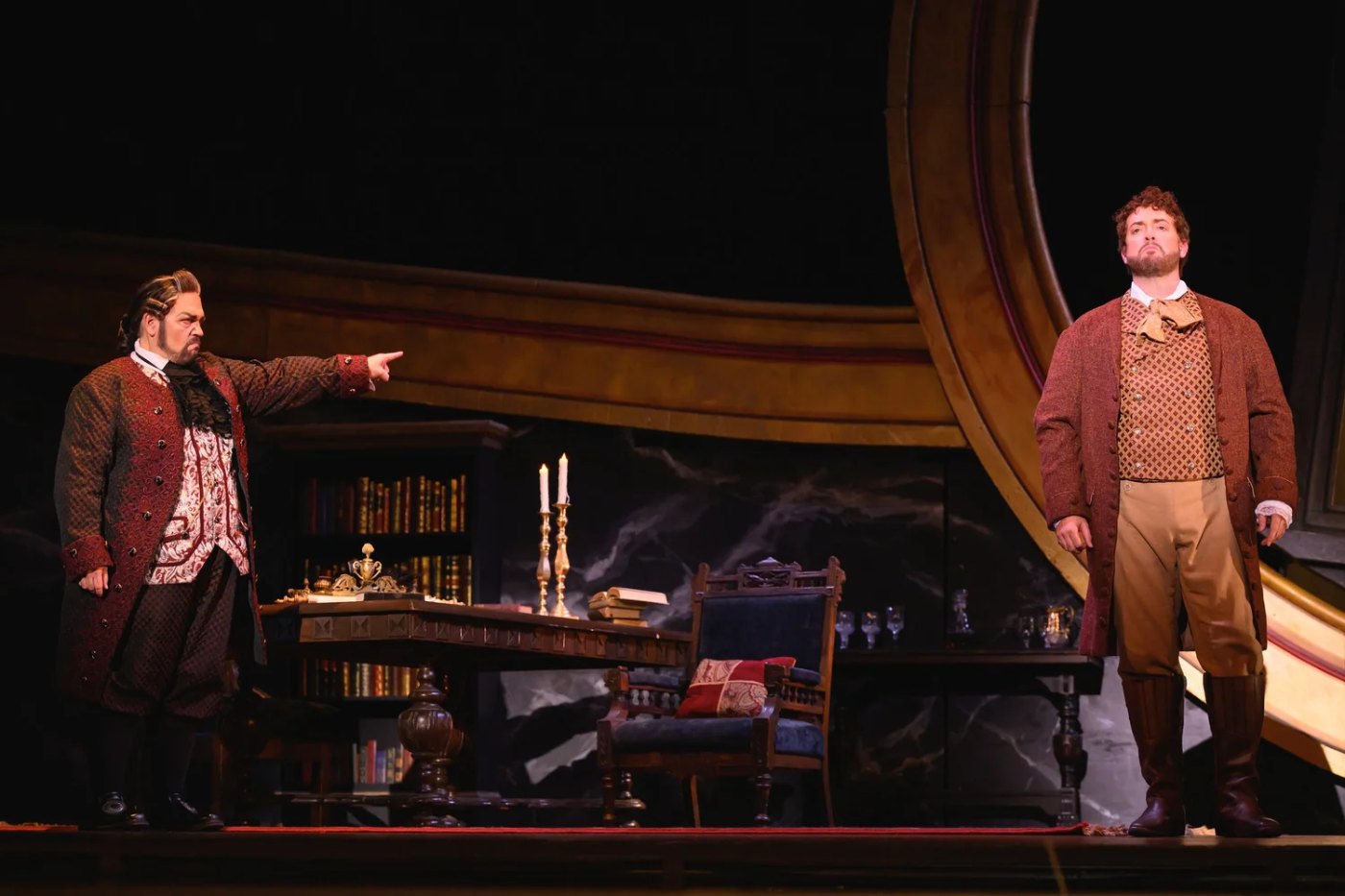
“A satisfying, expert production, a great hit with the audience.”
Broad Street Review. Read the review
OperaDEathmatch
November 21 and 23, 2025
Ethel L. Sayre Recital Hall, The OperaDelaware Studios, Wilmington
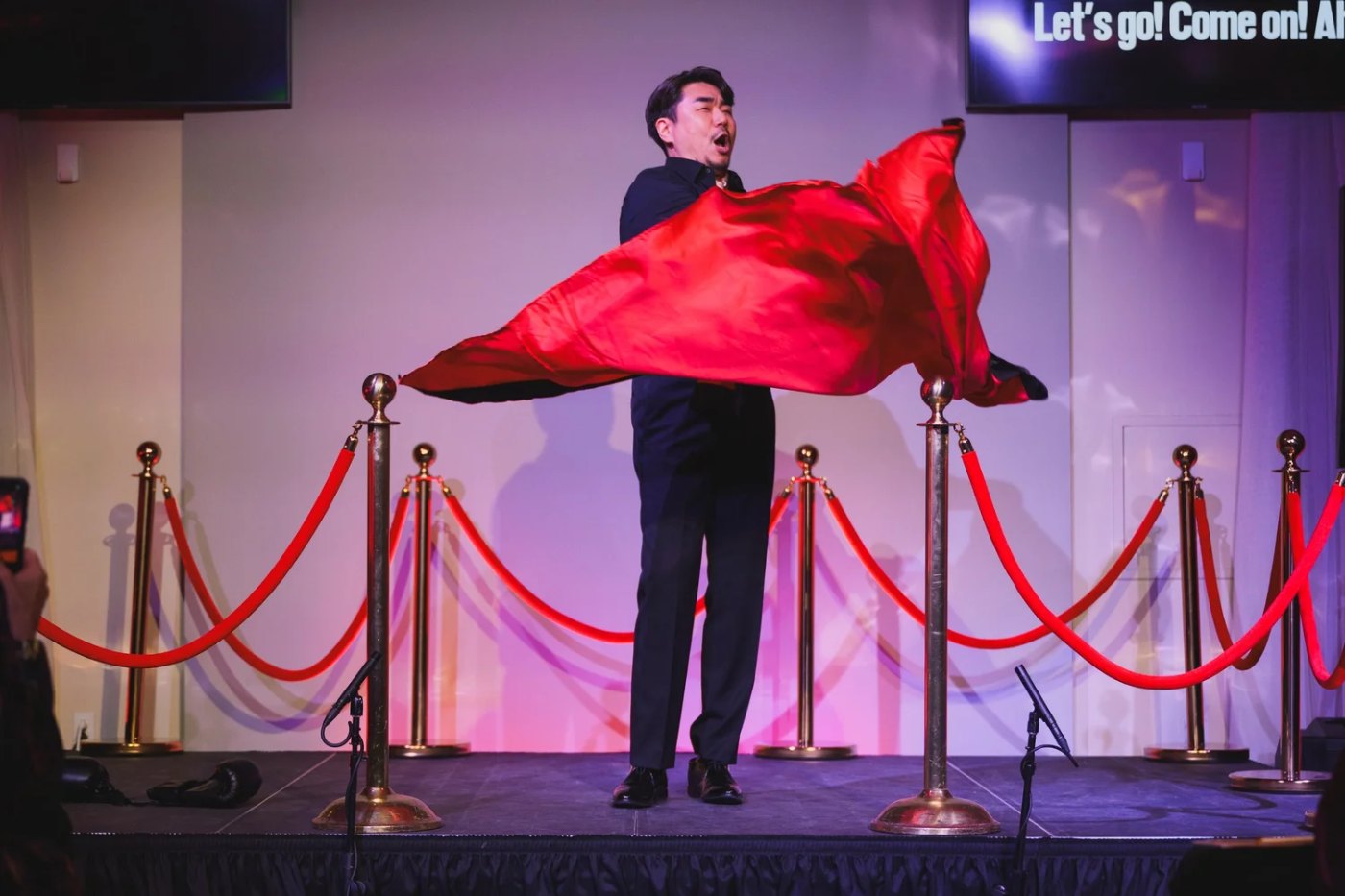
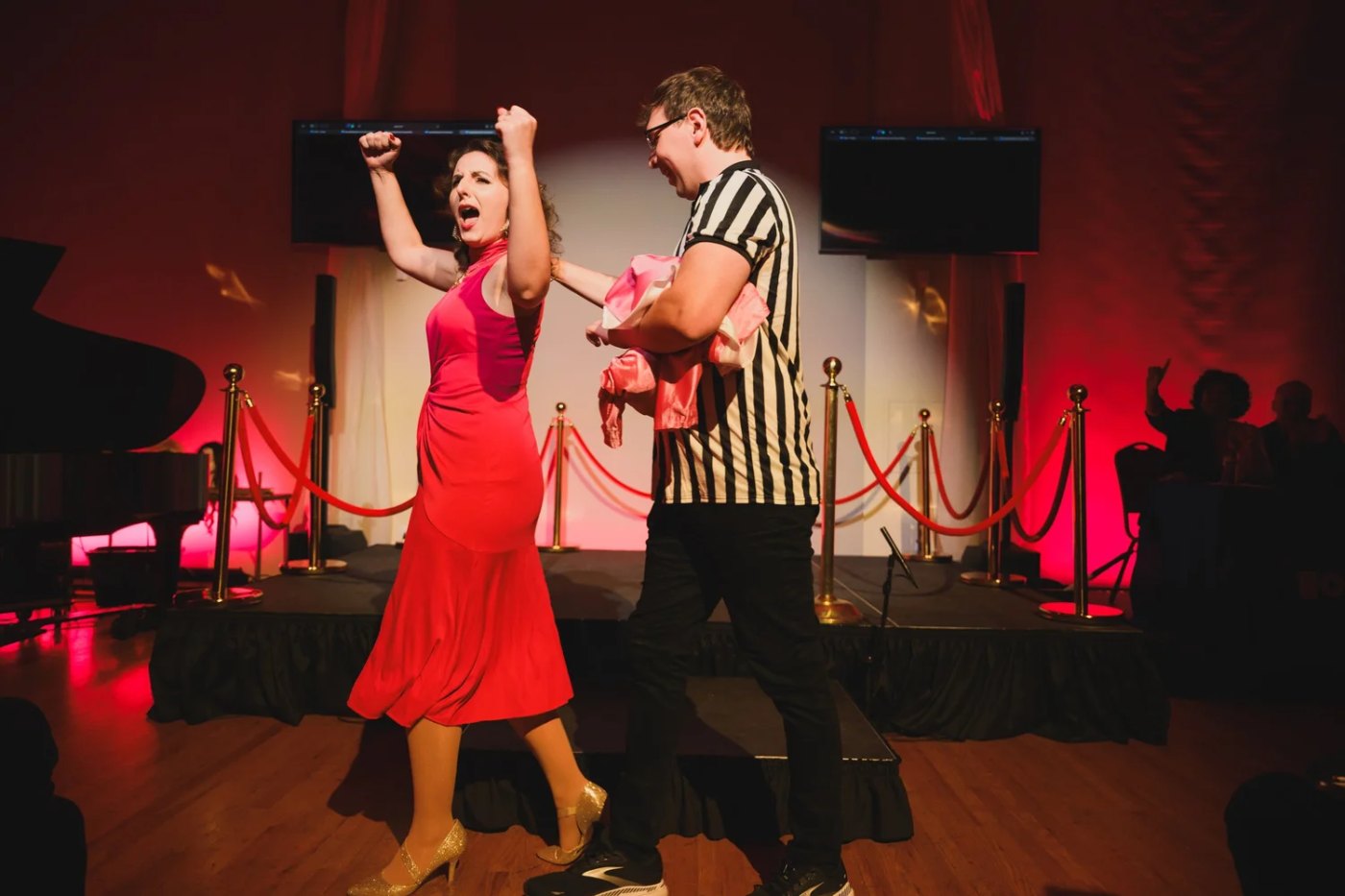
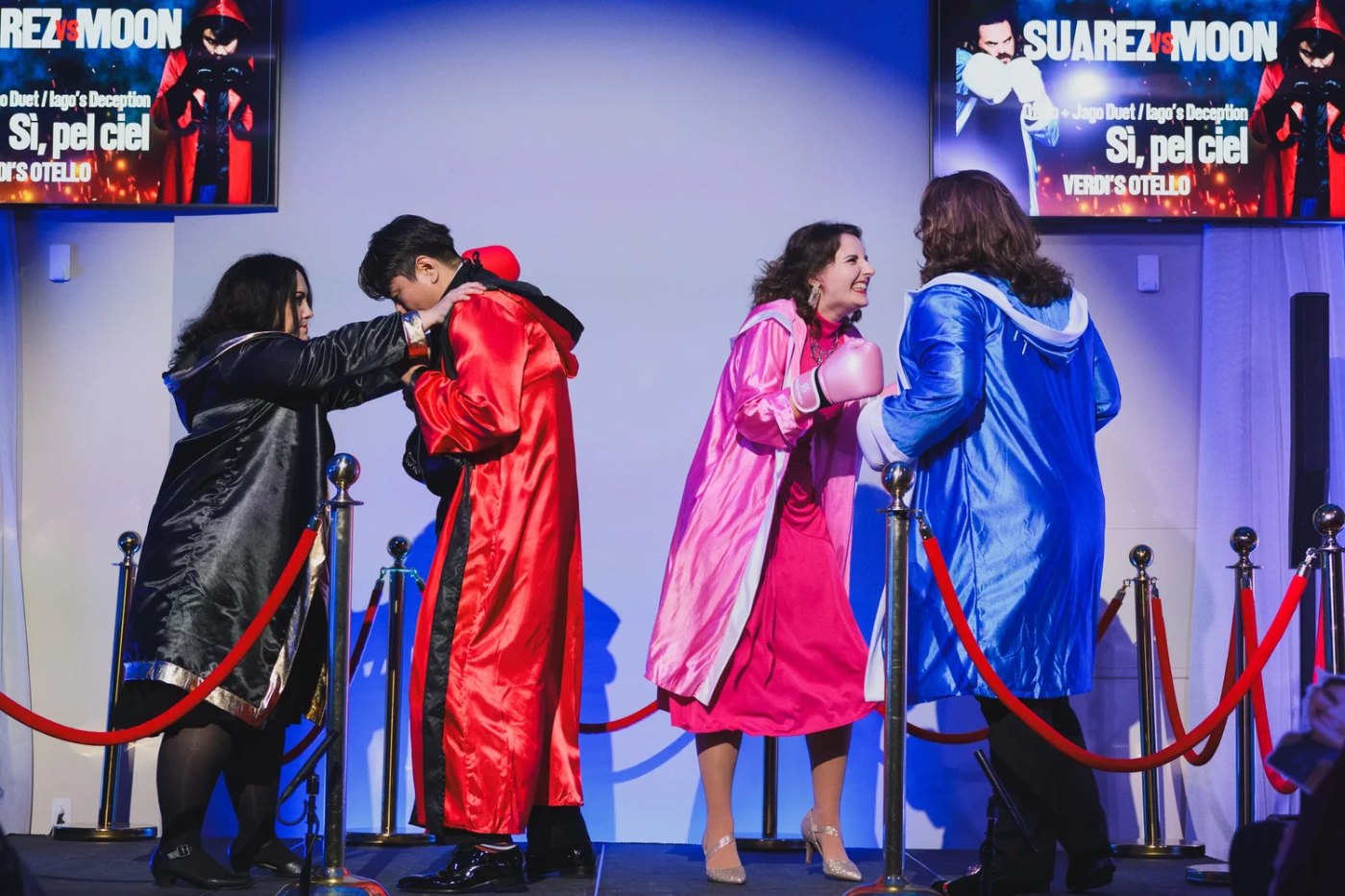
What happens when Delaware’s champion of the boxing ring teams up with Delaware’s champions of the opera stage? OperaDEathmatch: a one-of-a-kind collaboration between former IBO middleweight champion Dave Tiberi and OperaDelaware, celebrating the passion, discipline, and showmanship that unite sports and the performing arts.
The OperaDelaware Studios became a boxing ring for a 90-minute evening of opera, boxing, and comedy, “equal parts Puccini, pay-per-view, and parody,” in Dane Suarez’s words. Singers faced off in musical bouts drawn from opera’s great rivalries, the audience cheered on their favorites, and DELebrity boxers Andrew “The Sweet Scientist” Cottone, Aaron “Dr. Hitman” Bass, and Henry “Hammerin’ Hank” Milligan sparred head to head. The Company Artists created the event with Tiberi and chose the music.
The lineup: Company Artists Toni Marie Palmertree and Emily Margevich (sopranos), Dane Suarez (tenor), and Gerard Moon (baritone), with pianist Husan Chun-Novak, Dave Tiberi (“The Champ”), and Kerriann Otaño (“Opera Hype Girl”).
Video: OperaDelaware presents OperaDEathmatch, Nov 2025 (OperaDelaware YouTube channel)
Sponsors: Incyte, New Castle County, Dogfish Head, Truth Hustler, New Castle County Chamber of Commerce, Adesis, Meghan Newberry Photography, Boulden Brothers, Grey Fox Wealth, and Moonloop Photography.

Holiday concerts
December 18 and 20, 2025
Songs of the Season at the Schwartz
December 18, 2025 , Schwartz Center for the Arts, Dover
OperaDelaware returned to the historic Schwartz Center for an evening of holiday and operatic favorites from the OperaDelaware Company Artists, with Broadway showstoppers and holiday classics on the program. Before the show, DSU Downtown hosted a mixer in the lobby with a hot chocolate station and treats.
Holiday Candlelight Concert at Winterthur

December 20, 2025 , Copeland Lecture Hall, Winterthur
At the third annual Holiday Candlelight Concert, surrounded by the glow of hundreds of candles, OperaDelaware singers paired holiday classics such as “O Holy Night” and “White Christmas” with standards such as “Strangers in the Night” and “Some Enchanted Evening,” and opera favorites including “Nessun dorma” and “O mio babbino caro.”
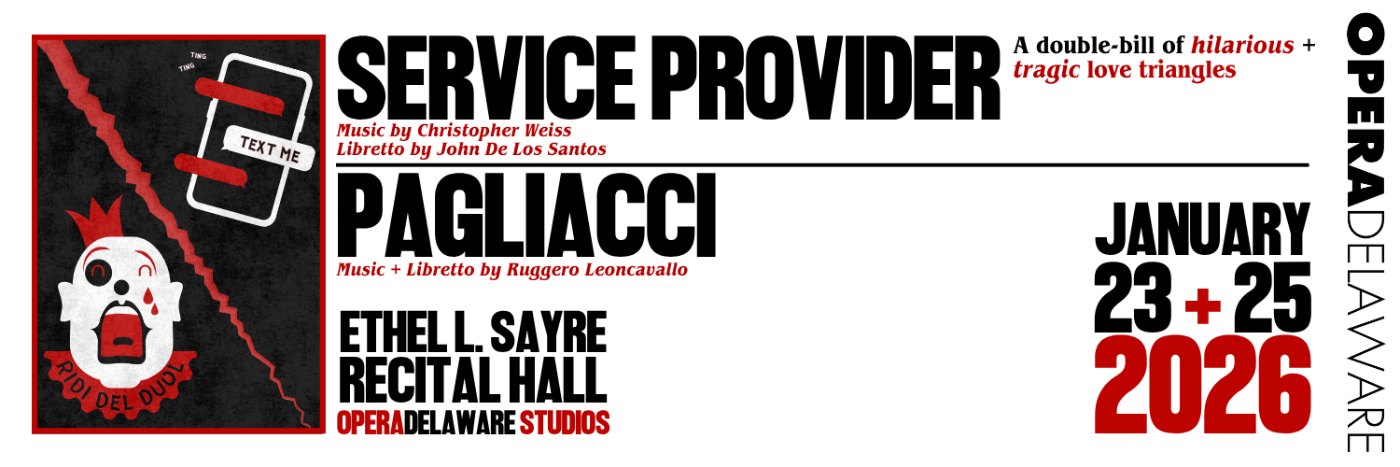
Service Provider and Pagliacci
Service Provider : music by Christopher Weiss, libretto by John de los Santos
Pagliacci : music and libretto by Ruggero Leoncavallo
January 23 and 25, 2026
Ethel L. Sayre Recital Hall, The OperaDelaware Studios, Wilmington
A sold-out double bill of one-act operas about betrayal, heartbreak, and love triangles gone wrong.
Service Provider is a witty contemporary comic opera, sung in English, commissioned by Washington National Opera’s American Opera Initiative and premiered at the Kennedy Center. When a married couple sits down for a romantic dinner, things take a hilarious turn with the surprise arrival of the husband’s mistress. Fast-paced and sharply written, it is a modern take on timeless relationship chaos.
After intermission came Pagliacci, Leoncavallo’s searing verismo classic of jealousy and betrayal, in which a clown’s onstage comedy turns into real murder. Presented with piano, it delivered the emotional power of a full-scale production with every note felt up close.
Cast
Service Provider
- Emily Margevich*Charlene
- Toni Marie Palmertree*Autumn
- Andrew PayneBeau
- Max ZanderDallas
Pagliacci
- Dane Suarez*Canio
- Emily Margevich*Nedda
- Gerard Moon*Tonio
- Andrew PayneSilvio
- Max ZanderBeppe
*OperaDelaware Company Artist
Creative team
| Stage Director and Dramaturg | Toni Marie Palmertree |
| Stage Direction Mentor and Dramaturg | John de los Santos |
| Music Director and Pianist | Sarah Thune |
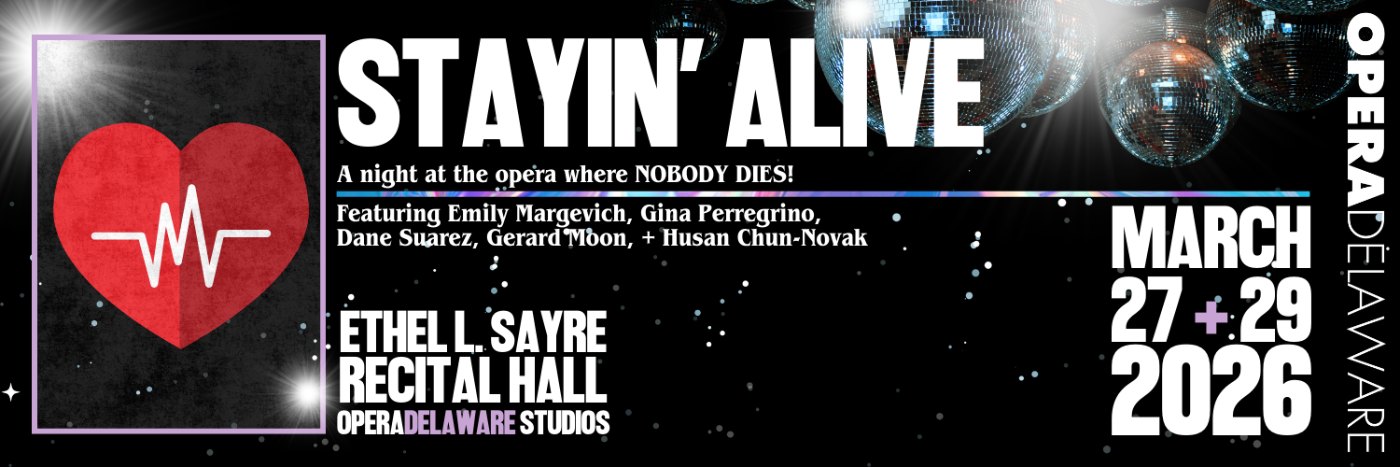
Stayin’ Alive
March 27 and 29, 2026, Ethel L. Sayre Recital Hall, The OperaDelaware Studios
Finally, a night at the opera where no one died. Company Artists Emily Margevich, Dane Suarez, and Gerard Moon, with mezzo-soprano Gina Perregrino and pianist Husan Chun-Novak, sang 90 minutes of comic scenes from Mozart and Rossini, romantic duets that end in celebration, and sparkling operetta and musical theater favorites. No poison, no pistols, no tuberculosis.
Andrea Chénier
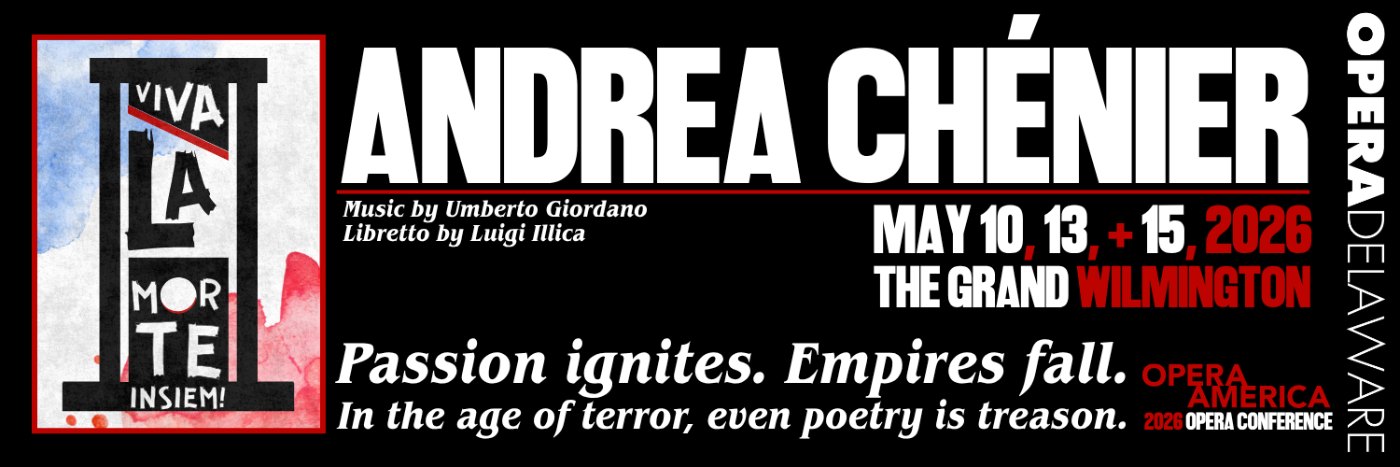
Andrea Chénier
Music by Umberto Giordano
Libretto by Luigi Illica
May 10, 13, and 15, 2026
The Grand Opera House, Wilmington
Company premiere, presented during the 2026 OPERA America Conference
A poet. A revolution. A love worth dying for. In May 2026, OperaDelaware gave its first-ever production of Giordano’s sweeping Andrea Chénier, an explosive tale of passion, political upheaval, and poetic courage set in the final, fiery days of the French Revolution. The performances coincided with the 2026 OPERA America Conference, which OperaDelaware hosted in Wilmington.
Inspired by the life of the poet André Chénier, this gripping work of Italian verismo follows an artist who dares to challenge the status quo. As the world around him crumbles into chaos and bloodshed, Chénier’s words become weapons, raising ideals of liberty and love above fear and oppression. But when he falls for the noblewoman Maddalena and crosses paths with the vengeful revolutionary Gérard, a tragic triangle forms.
Giordano’s score pulses with human drama, from the soaring lyricism of “Come un bel dì di maggio” to the searing “La mamma morta,” the aria many audiences know from the film Philadelphia. Company Artists Dane Suarez, Toni Marie Palmertree, and Gerard Moon led the cast, with a full orchestra and chorus. Moon has a particular bond with his role: he chose the name Gerard when he came to the United States, out of his love for this opera and for Gérard in particular.
Video: OperaDelaware presents Andrea Chénier (promo) (OperaDelaware YouTube channel)
“Should be celebrated as a matter of great local, nay regional pride.”
Opera Today. Read the review
Synopsis
1789, at the Château de Coigny near Paris. Gérard, a servant of the Countess di Coigny, mocks the aristocracy and its manners. Watching his elderly father struggle with a piece of furniture, he laments the suffering of all servants under their arrogant masters (“Son sessant’anni”). Maddalena, the Countess’s daughter, appears, and Gérard realizes how much he loves her. Busy with preparations for that evening’s party, the Countess scolds Maddalena for not yet being dressed. Maddalena complains to her maid, Bersi, about the discomfort of current fashions and runs off to change.
Among the guests is Fléville, a novelist, who has brought the rising poet Andrea Chénier. After the Abbé relates the latest grim news from Paris, Fléville enlivens the party with a pastorale written for the occasion. Maddalena teases a reluctant Chénier into improvising a poem (“Un dì all’azzurro spazio”), and he scandalizes the guests by criticizing the clergy and the aristocracy for their indifference to the poor. The guests’ gavotte is interrupted by Gérard, who brings in a group of starving peasants. The Countess orders Gérard out with them. The guests are invited to return to the dance, but they leave instead, and the Countess is left alone.
1794, along the Cours-la-Reine in Paris. The Revolution has come, and the Reign of Terror is in full force. To fend off the Incredibile, a spy, Bersi pretends to be a daughter of the Revolution (“Temer? Perché?”). The Incredibile is not deceived and notices that Chénier is waiting for someone at the Café Hottot. Chénier’s friend Roucher brings him a passport so he can leave the country safely, but Chénier says his destiny is to stay, find the love he has never known, and discover who has been writing him anonymous letters (“Credo a una possanza arcana”).
A procession of dignitaries led by Gérard interrupts them. The Incredibile takes Gérard aside, and Gérard describes Maddalena, the woman he is searching for. Meanwhile, Bersi asks Chénier to wait at the café for someone who wants to meet him. Maddalena appears and reveals that she wrote the letters, and the two pledge to love each other until death (“Ora soave”). The Incredibile, having seen them together, brings Gérard to the scene. Chénier defends Maddalena and wounds Gérard in a duel. Gérard, recognizing Chénier, sends him away and asks him to protect Maddalena. When the gathering crowd asks who wounded him, Gérard answers that he does not know.
July 24, 1794, the courtroom of the Revolutionary Tribunal. Mathieu, a revolutionary, urges the crowd to donate to the cause, without success. Gérard, recovered from his wound, makes an impassioned plea for the motherland. Madelon, an old woman who has already lost her son and a grandson in the war, offers her last grandson as a soldier (“Son la vecchia Madelon”). As the crowd disperses, the Incredibile tells Gérard that if he wants Maddalena, he must first arrest her lover, Chénier.
As Gérard writes the accusation, he is filled with remorse at the bloodshed of his rise to power and admits that passion is now his master (“Nemico della patria”). No sooner has he handed the indictment to the clerk than Maddalena appears. Gérard admits that he has laid a trap for her and that he loves her. Maddalena offers herself to him if he will save Chénier, telling how her mother was killed and their home burned, and how she has lived as a fugitive (“La mamma morta”). Moved by her love for Chénier, Gérard promises to try to save him. Before the Tribunal and an unruly mob, Chénier pleads for his life (“Sì, fui soldato”), and Gérard tells the judges that his accusation was false. Chénier is sentenced to death nonetheless.
July 25, 1794, the courtyard of the Saint-Lazare prison in Paris. Chénier reads a final poem (“Come un bel dì di maggio”) to Roucher, who bids him farewell. Gérard and Maddalena arrive, and Maddalena bribes the jailer, Schmidt, with jewels to let her take the place of a young woman condemned to die. Gérard leaves to plead Chénier’s case once more with Robespierre. Maddalena tells Chénier she has come to die with him, and as day breaks they share one last moment (“Vicino a te”) before they are taken to the guillotine.

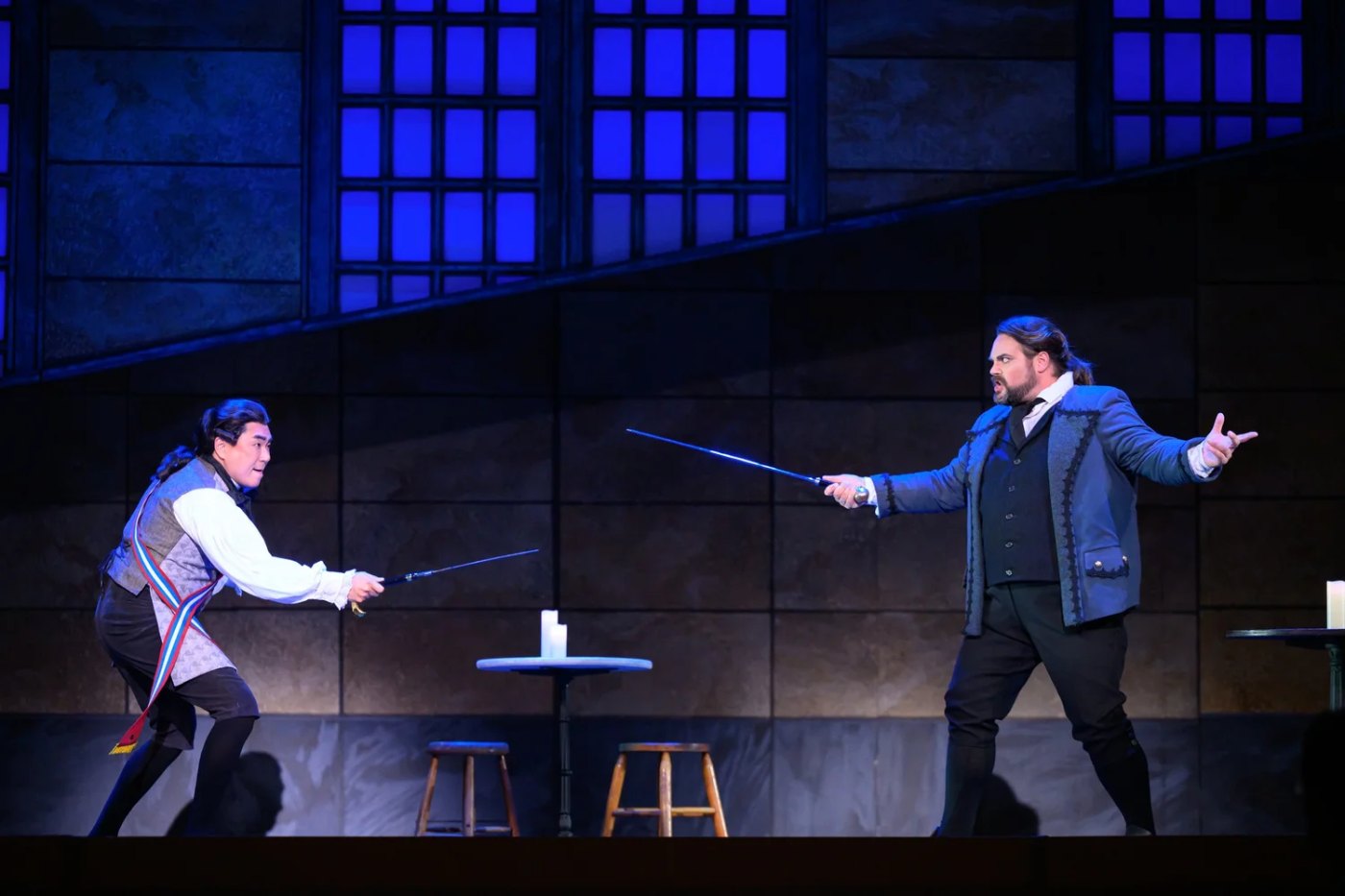

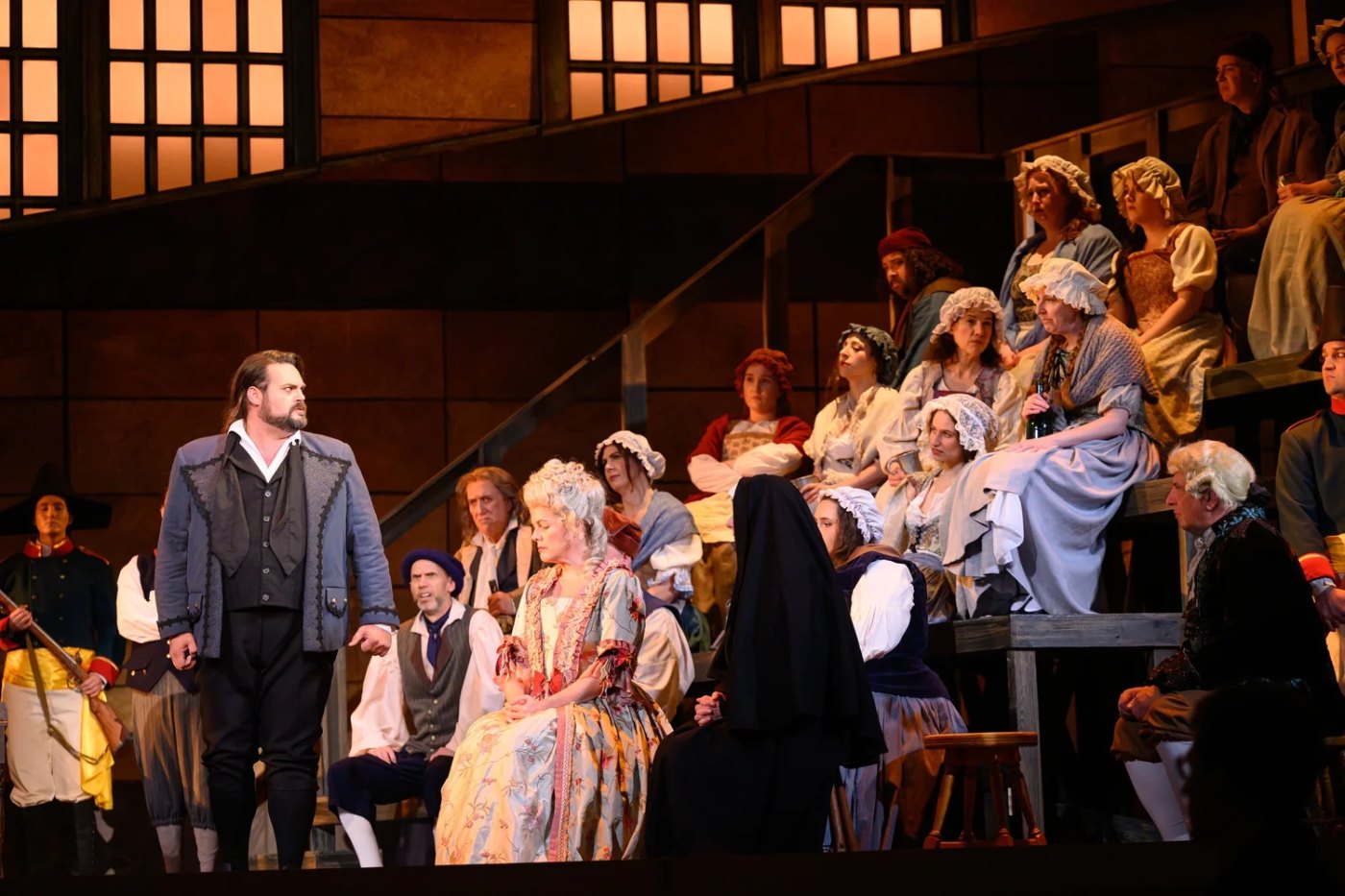

Photos by Joe del Tufo for Moonloop Photography, May 8, 2026, at The Grand Opera House.
Cast
- Dane Suarez*Andrea Chénier
- Toni Marie Palmertree*Maddalena di Coigny
- Gerard Moon*Carlo Gérard
- Taylor-Alexis DuPontBersi
- Max ZanderL’Incredibile
- Brian James MyerMathieu
- Dylan GreggRoucher
- Daryl FreedmanMadelon
- Lauren CookCountess di Coigny
- Marcus DeLoachFléville and Fouquier-Tinville
- Douglas RowlandThe Abbé
- Dominic WalkerMajor-domo and Dumas
- Dante DoganieroSchmidt
*OperaDelaware Company Artist
Creative and production team
Creative
| Stage Director | Octavio Cardenas |
| Conductor | Anthony Barrese |
| Scenic Designer | John Raley |
| Lighting Designer | Tláloc López-Watermann |
| Associate Lighting Designer | Elijah Thomas |
| Hair and Makeup Designer, Costume Coordinator | Brittany Rappise |
| Props Coordinator, Production Assistant | Chelsea Dean |
Music staff
| Chorus Master | George Hemcher |
| Assistant Conductor | Luke Poeppel |
| Rehearsal Pianist | Julian Grabarek |
Production
| Production Stage Manager | Anthony Rivera |
| Technical Director | Bob Parker |
Parking Lot Pagliacci
Thursday, July 16, 2026
The OperaDelaware Studios parking lot, Wilmington Riverfront
Picture it: the sun going down over the Wilmington Riverfront, a lawn chair, a cold drink, a burger off the grill, and friends all around. Then the music started, and everyone locked in. That was Parking Lot Pagliacci, a one-hour outdoor adaptation of Leoncavallo’s opera, with a tailgate happy hour before the show.
Pagliacci gave the world “Vesti la giubba,” the crying clown’s aria that has brought audiences to tears for more than a century. It is the story of Canio, a clown who performs for the crowds while his private world collapses: a love that curdles into obsession, the masks we wear to hide our pain, and the terrifying moment the mask falls away.
Company Artists Dane Suarez, Emily Margevich, and Gerard Moon performed with guest artists Brian James Myer and Malcolm Richardson and pianist Sarah Thune, close enough for the audience to feel their voices under the open sky.


Cast and creative team
- Dane Suarez*Canio
- Emily Margevich*Nedda
- Gerard Moon*Tonio
- Brian James MyerSilvio
- Malcolm RichardsonBeppe
*OperaDelaware Company Artist
| Stage Director | Toni Marie Palmertree |
| Music Director and Pianist | Sarah Thune |
Joseph and the Amazing Technicolor Dreamcoat
Joseph and the Amazing Technicolor Dreamcoat
Youth production of the Summer Rock Opera program
Music by Andrew Lloyd Webber
Lyrics by Tim Rice
August 15 and 16, 2026
The OperaDelaware Studios, 4 S. Poplar Street, Wilmington
Joseph and the Amazing Technicolor Dreamcoat was presented by arrangement with Concord Theatricals on behalf of LW Entertainment.
Soprano and Company Artist Emily Margevich led a cast of enthusiastic young performers in an adaptation of Joseph and the Amazing Technicolor Dreamcoat, the summer showcase of OperaDelaware’s tuition-free Rock Opera program.
One of the most enduring shows of all time, Joseph is told entirely through song. With the help of a Narrator, we follow Joseph, a dreamer just like you. Favored by his father, he faces jealousy and exclusion from his brothers. The road is not an easy one, but opportunity raises Joseph to power, and his family is reunited in an act of forgiveness and love.
Margevich created the program after visiting schools across the state with her Opera Immersion Curriculum. “Joseph is a story about believing in dreams,” she wrote. “Opera is alive and well here in Wilmington.”
