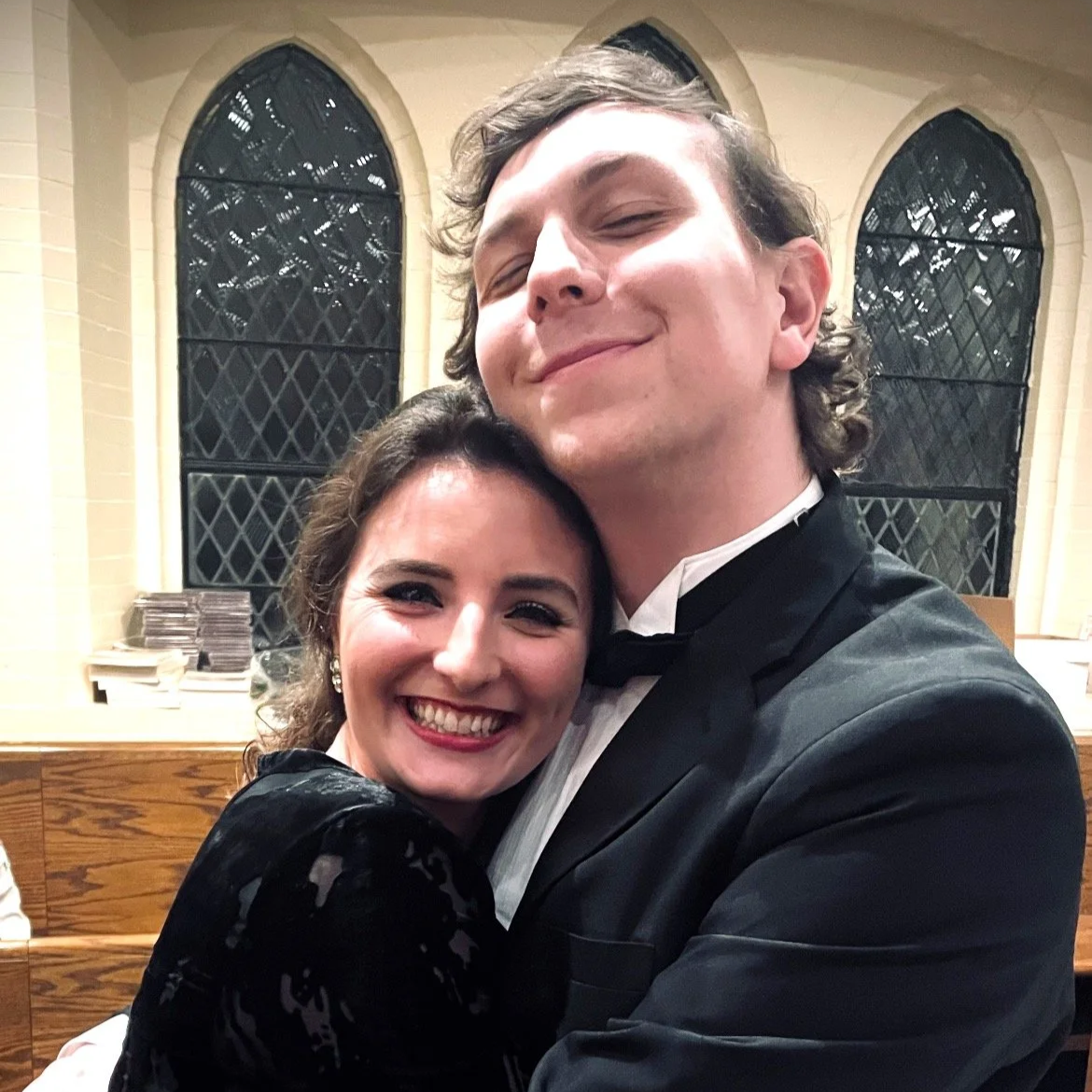
Cabaret for Two: Love + Marriage (Yuri and Gerard's story)

Written by Yuri Kim Moon

Gerard and I attended the same university. I was a sophomore at the time, and we were both in the concert choir. I was the accompanist, and Gerard sang in the bass section, but we didn’t really know each other well.

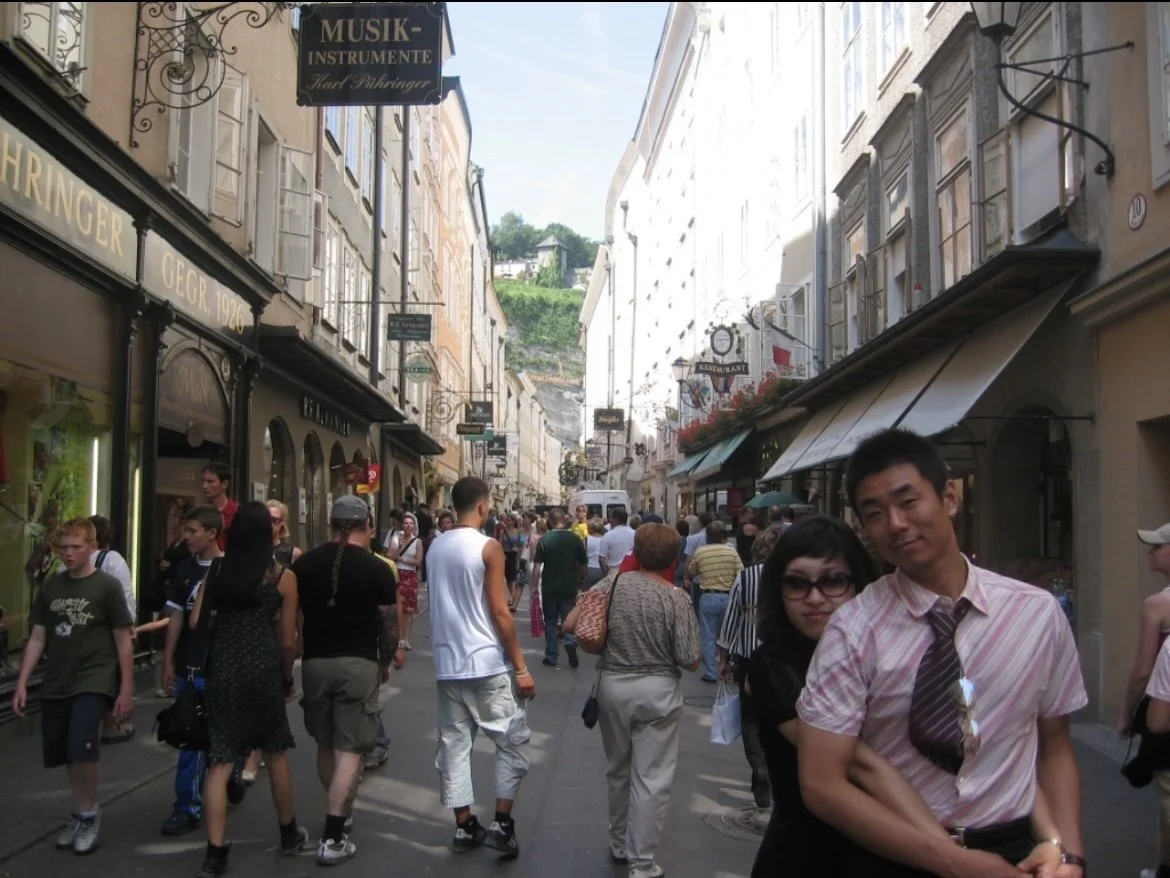
Yuri and Gerard in salzburg when they first began dating in 2004.

That summer, Gerard and I happened to both join the same summer program in the Czech Republic and Salzburg. Among all the participants, we both only knew each other. We started spending time together and talking more, and naturally, we grew close. After returning to Korea, we continued dating as a campus couple for three years. Around the time I graduated from college, we got married and then moved to the United States to continue our studies.

When we first started dating, one of the professors in our summer program said something we’ve never forgotten: falling in love is easy, but staying in love takes real effort. She also told us to look at each other with our eyes half open..not expecting perfection, but choosing to really see each other. I think what she was really saying was to look at each other’s good sides more than the bad ones. Over time, we’ve learned that marriage is about slowly growing into each other. Who we become together depends a lot on how we choose to treat one another every day. It means listening to the same stories like they’re new, being patient, and showing care in small ways. For us, love isn’t about giving love the way we want it, but learning to give it in the way the other person needs.

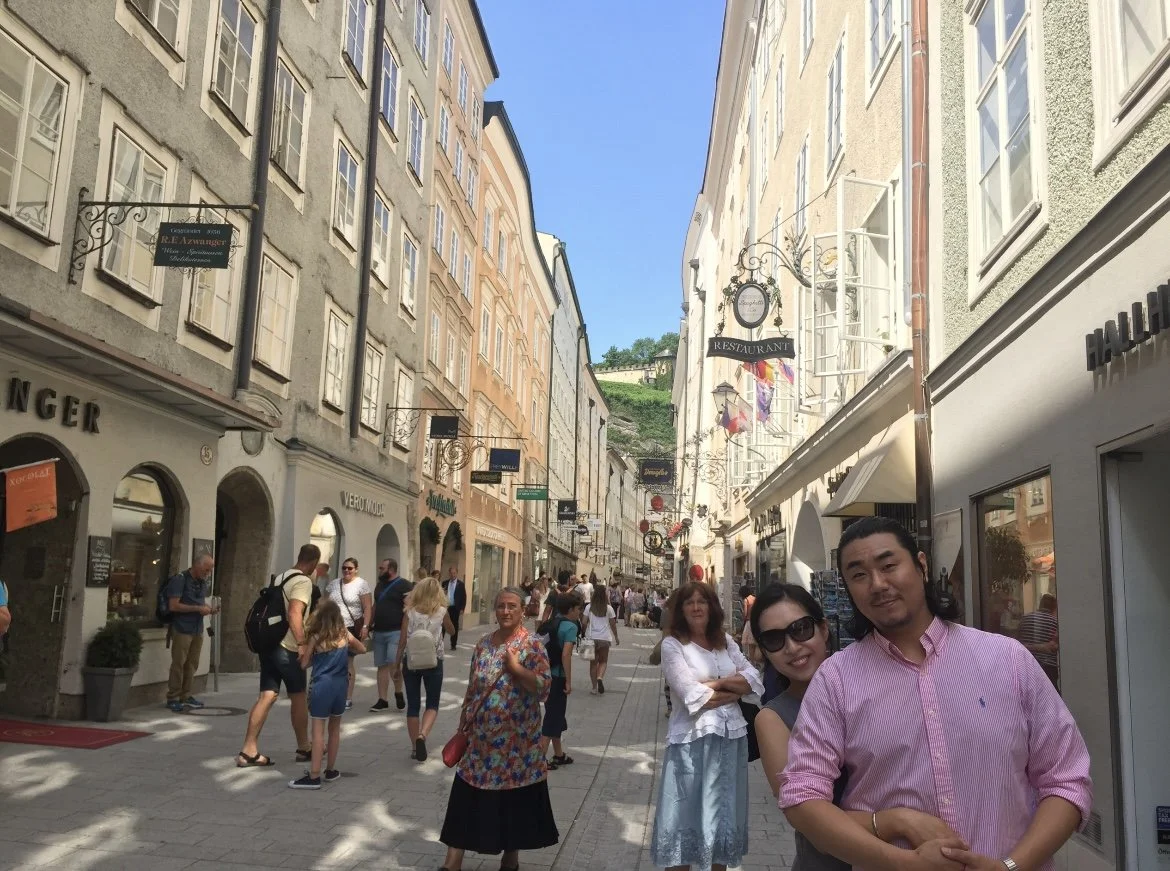
Yuri and Gerard returned to salzburg to celebrate their 10 year wedding anniversary in 2017.

GET TICKETS

Cabaret for Two: Love + Marriage (Emily and Dylan's Story)

Written by Emily Margevich, OperaDelaware Company Artist

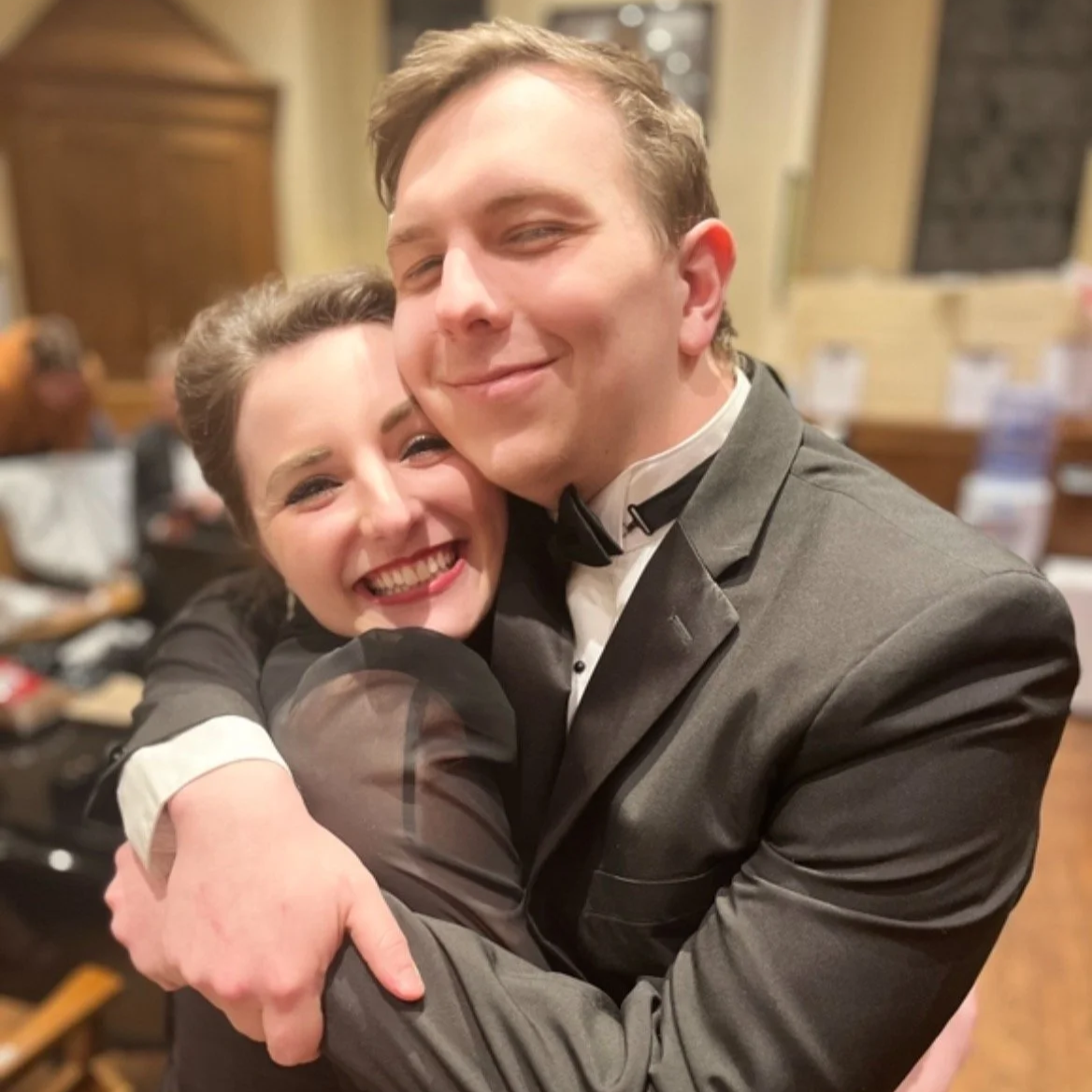
Emily and Dylan snuggled up at a concert early in their relationship.

We met as students at the same music school, The Academy of Vocal Arts, in Philadelphia, September of 2022.

We liked each other as people immediately, and we always felt like we knew each other already. Whenever we spoke, it seemed like nothing else was going on anywhere around us. We became good friends in spring of 2023 doing Don Giovanni together at AVA, and we always were being goofy together and having fun.

We started writing to each other for weeks during the summer of 2023 while at different summer programs, and thus we got to really know each other. No one confessed any love, but we each separately had a feeling we’d be together soon, and forever.

We started dating in September of 2023 when the AVA school year started its season, as soon as we were back to Philly from the summer of writing.

Emily and Dylan replicating their earlier photo a year later at the same concert.

We loved being in the same place every day together through our studies. We were never apart, and we had so much fun sharing our AVA days together that entire school year season.

The surprise was successful when Dylan proposed on May 17, 2024 after my graduation recital by singing the song “You and I” from the movie Meet Me in St. Louis.

Since we’re both performers, we didn’t plan a wedding date for a while because we never knew where we’d be and for how long.

Truly helped by the fact that I have a full time job with OperaDelaware, a wedding date was able to be made and kept! One wedding will be in Illinois on April 12, and one wedding will be in Pennsylvania on June 28 of 2026.

Would you believe that we both have a lot of family in nearby small towns in the Midwest? Would you believe that Dylan’s cousin’s wife’s aunt was my grade school band teacher?! It’s true!! We have 12 year old cousins who became friends this year going to the same school, but we all only just found out that they’ll both be junior bridesmaids in our wedding party! Small world!!

All of the songs we’ve chosen for the Love and Marriage cabaret really encapsulate how we feel about each other. We’ll be reading poetry and speaking about our love during the concert. The song “Widmung”, for me, is exactly all that I feel for Dylan.

What Yuri wrote about putting the other person in your relationship first is so perfectly said and just exactly how we feel, too. The four of us have had such an endearing and fun time realizing that our love stories are very similar!

A friend asked us once what has been the most surprising part of dating each other, and we said that we were maybe not surprised but in awe of the fact that we never had to get used to each other; we felt very close and completely comfortable about everything immediately. Loving each other felt like an extension of ourselves had been connected and found. Everything has changed, but nothing has changed. To feel that you are on the true path of your life in finding your soul mate is the most grounded, most powerful perspective the universe has to offer.

Get tickets

Why Tosca Still Terrifies Us: A 19th-Century Thriller for Our Times — Haley Stamats + Domenico Boyagian

The Stage Director's Perspective — Haley Stamats

Often called an “operatic thriller”, Tosca is a tragedy of political strife and circumstance that leads all three main characters to their death in 24 hours. It sounds like a Hitchcock or A24 film.

Though Sardou was a well-known and beloved historical playwright, Puccini transformed Sardou’s play which suffered from too much exposition, uneven pacing and extraneous characters into a concise musical drama. Much like in La bohème, Puccini was a master of brevity and dramatic timing. No note or word is out of place.

The opera begins in Rome on the afternoon of June 17, 1800 and ends at dawn just 17 hours later. In a span of a single evening, all our main characters end up dead.

Three hundred sixty-five miles away, the Battle of Marengo rages on as Austrian Royalists clash with French Revolutionaries. The French cry for "Liberté, égalité, fraternité" (Liberty, equality, fraternity), as Enlightenment ideals sweep across Europe in the wake of the French Revolution. Napoleon Bonaparte has yet to make himself Emperor. Cavaradossi believes in what Napoleon represents and in the revolution for man’s natural rights. As Voltaire and Robespierre proclaimed, natural rights are fundamental and exist independently of any government, legal system, or religious authority—something that, as Americans in the face of tyranny, we can all agree upon.

As a Bonapartist, Cavaradossi sees the Catholic Church’s influence as a necessary evil. A tool that can help “the State” to achieve political stability. But in matters of faith, he believes in reason over religion.

For Tosca, love and art are reason enough. Orphaned as a child, she was raised by Benedictine monks. The convent organist gave her singing lessons, and her path to becoming an opera singer was even blessed by the Pope himself. The Pope told her:

“Go in freedom, my child, you will move every heart as you have moved my own; you will shed sweet tears; and that, too, is a way of praying to God.”

In many ways, Tosca is a free woman.  She lives for art and for love because her faith allows her to do so. But over the course of the opera, her faith is tested. This tension reaches its peak in the iconic aria, “Vissi d’arte”, which is not in the original play. Puccini added this aria to highlight her inner turmoil. Tosca is angry at God because she has lived a life devoted to art, love, and faith, only to be caught between politics, her love for Cavaradossi and her own freedom. Yet even after killing Scarpia, she performs a quiet ritual of forgiveness for him. She retains her hope and faith, trusting in Scarpia’s promise that Cavaradossi’s death will be faked and they can escape to their freedom.

In the final moments of the opera, having been deceived by Scarpia with Cavaradossi dead at her feet, Tosca screams “With me, Scarpia, before God!” before throwing herself off the parapet. Even in the end, she believes in God’s justice, for herself and for Scarpia, despite the act of suicide that risks her eternal soul. Tosca believes she is the exception to the rule because of the life she led through art and love.

This is how the operatic thriller ends. War ravages Europe, revolution simmers, and Napoleon prepares to crown himself emperor while a corrupt Chief of Police is stabbed, an idealist painter shot to death, and an opera singer lies dead on the street. Each character remained steadfast in their beliefs, no matter how backward, idealistic or hopeless. To them, there were no choices. This is where the tragedy lies.


The Conductor's Perspective — Domenico Boyagian

Conducting Tosca is never simply about leading Puccini’s music; it is about wrestling with the questions it raises. From its first bars, this opera takes us into a world where power is absolute, faith is corrupted, and love becomes dangerous. Scarpia kneels in prayer while plotting cruelty, a reminder of how easily religion can be twisted into a mask for violence. And that hypocrisy is not confined to history.

What makes Tosca so unsettling and true is its clarity: Puccini strips away pretense and shows us what happens when institutions meant to guide and protect instead oppress and persecute.

Truth is bent and reality is opinion; bigotry is often found hiding behind piety, and fear is used to silence compassion. The drama dances with prophecy.

And yet, Puccini goes beyond despair. In Tosca’s music, we hear the beautiful fragility of love, the flames of defiance, and the courage of someone who refuses to be broken. She is both victim and victor, where the human spirit, if nothing else, has the power to resist.

The task for me is dual: to highlight the brutality of oppression and the radiance of hope through flawless dramatic pacing. This performance celebrates a magnificent human achievement. And for any of us lucky enough to perform it, Tosca becomes more than an opera. We are called not only to honor Giacosa, Illica, and Puccini’s genius but also to confront the truths they lay bare: that power can corrupt, that faith can be misused, but that love, courage, and the human spirit still have the strength to rise above.

Becoming Tosca: Emily Margevich on Faith, Love, and Finding Her Voice

photo by meghan newberry photography

Kerriann Otaño: As someone who worked on Tosca myself as a singer, I know how monumental this role feels in a soprano’s life. It isn’t just another Puccini heroine — it’s a milestone, a proving ground, and a deeply human story that asks everything of an artist’s voice, spirit, and soul. Watching Emily Margevich, one of our inaugural OperaDelaware Company Artists, step into this role has been extraordinary.

Emily previously sang Musetta for us, she’s created new work in Fearless, and she’s poured her artistry into recitals and pop-ups across our state and in our community. This fall, she makes her role debut as Floria Tosca — a character who is at once a diva, a lover, a woman of faith, and a fighter.

I had the chance to sit down with Emily and talk about what this journey has meant to her. Her answers are raw, heartfelt, and full of insight into why Tosca continues to move audiences 125 years after her creation.


emily margevich as musetta (la bohème) photo by joe del tufo

KO: Emily, what makes Tosca such a milestone role for a soprano?

Emily Margevich: Great question! I believe I’ve been fortunately—and perhaps naïvely—so excited and focused on becoming Tosca that I haven’t often thought about this role being such a role of arrival in one’s status in our opera industry and on our stages. I’m so beyond proud and thankful this is happening to me that I’m still a little shocked it’s real!

Tosca is such a heroine. This opera is so beloved. The gravity of singing opera is our daily connection to the past. This music has been sung by all the divas. Tosca herself is the diva. The role demands a level of acting depth and vocal stamina that doing both well all night long has earned it the right to be a milestone role. You can all tell me after the last show if I got close to achieving this badge of opera honor!

KO: How does stepping into this iconic character differ from other roles you’ve sung with OperaDelaware before?

EM: I’ve never been the title of an opera. The closest I’ve had so far was being half of Hansel und Gretel and half of Roméo et Juliette. It’s cool to be the entire title!

With OperaDelaware, I sang Musetta last fall and had a featured role in our world premiere of Fearless. (I’ve never played anything like the role I played in Fearless. I considered myself the villain in Fearless, and sopranos are rarely—if ever—anything close to villainous!) Musetta and Tosca are both singers and performers, and they’re both Puccini girls. They’re both very confident people, they love intensely, the word “jealous” is never far from their atmosphere, and they’re very smart.

Juliette was my first most challenging role—the length of being on stage the entire time; Violetta [in La traviata] was difficult in similar ways. Tosca feels very familiar to me in my person, my body, and my voice. I’ve had to learn the role faster than I’ve had to learn other roles just given my singing schedule, but it sunk in with a secure depth. Tosca has opened a door in my mechanism similar to Tatyana [in Eugene Onegin], but much more dramatic, more mature, and the emotional stakes are so high that the music is powerful and all-encompassing.

photo by meghan newberry photography

KO: Share your personal feelings about being trusted with such a monumental role at this stage in your career.

EM: Trust is the word. Brendan and Julia [OperaDelaware and Opera Baltimore General Directors, respectively], Toni Marie [OperaDelaware Company Artist], Gerard [OperaDelaware Company Artist], and you and Dane [OperaDelaware Company Artist] really believe in me and tell me so often. I’ve always had a strong resilience for my opera career, as I love singing and feel fortunate I get to experience music personally in this way.

Doing the Puccini Portraits program with Husan [pianist/composer/arranger], John [Cavaradossi in Tosca], and Steven [Scarpia in Tosca] was a true gift. With their loving support and friendship—and having the opportunity to sing Tosca scenes in so many different venues around our community—I was given invaluable playtime to explore my Tosca for and with an audience before official rehearsals started.

I feel so grateful and deeply blessed to sing my dream role this year. No job, no “win,” no external validation will ever shake or change the way I love, need, and respect singing as a spiritual communion that I regard as sacred for myself—which is very much how Tosca feels. Thanks to the Company Artist program, I get to live for art and for love every day.

"Vissi d'arte, vissi d'amore"

KO: How has exploring Tosca—and your role as an OperaDelaware Company Artist—deepened your artistry or changed the way you see yourself as a performer?

EM: This role has deepened my humanity. My personal want for my life. The word spirituality. My health struggles. The “why me” that we all unfortunately have asked, no doubt. Why did I get sick at this important moment? Why God or universe did you grant me such a special beautiful gift of my singing voice only to be subjected to the worst pain? The most heartbreak? The deepest struggle?

The poem of Vissi d’arte—the “why”—unfortunately I’m sure we’ve all been there once or twice. Why me? What am I supposed to do? I don’t feel like I deserve this treatment. What’s the lesson? Vissi d’arte is the lesson, and vissi d’amore is the purpose.

KO: That’s so powerful, Emily. I think every artist who has stood in front of an audience has felt that push and pull between pain and purpose. When you talk about Vissi d’arte in that way, it sounds less like an aria and more like a prayer.

photo by meghan newberry photography

EM: My mom and I always debate that “everything happens for a reason” quote. I love it and use it. She brings up valid arguments against it. But for me, by the end of Act II, my Tosca sees a bigger picture—committing an act so unbelievable that perhaps, for the good of the people, to honor in a way her Mario and the ones who fight for what they believe in, sometimes someone has to, unexpectedly, checkmate. Going beyond personal dreams and realizing the fragility of life we all are living. For whom are we living?

This question opened the floodgates for my exploration of becoming Floria. The last three years of my life have brought the biggest changes, challenges, and the most beautiful clarity of perspective.

I’ve grown to understand and find deeper faith without bitterness or defeat, rather to find real peace in the unknown future. Knowing life doesn’t happen as you may have thought, planned, or even wished. Pain makes room for other love—a healing love, a lasting love, a true love that turns your world around and reminds you how fragile life is.

KO: You’ve lived so much of what Tosca wrestles with in just 24 hours of opera — faith, love, sacrifice. Do you feel like your own life experiences have made you more ready for her than you would’ve been a few years ago?

EM: I always scoffed when people would say, “You should travel the world to really be an artist and sing these roles” or “you’ve gotta live and have experiences to play these characters well.” I’m of the opinion of Sir Laurence Olivier—it’s called acting.

However: perhaps my disdain for such comments is because that seems obvious. Of course the more you know, the more you live, the more you’ll have experienced the highs and lows of what it means to be alive. But knowing Dylan Gregg (my fiancé — find him at the show, he’s the most handsome man there so you’ll know him!) and loving him as I do, it certainly makes acting easier… and at times harder! I’m not a method actress, no one be alarmed (haha) but there’s so much of Tosca in me already.

Examining how she handles Act II hasn’t changed my artistry, but it has allowed my artistry to be changed when I put it in the lens of what’s most important in my life. Through Tosca’s journey, I see echoes of the last three years of my own life. Not nearly as dangerous or dramatic, but there are similarities — courage, questions, sacrifice — willingly given when perspectives change.

KO: That’s beautifully said. I love the way you connect Tosca’s faith and resilience to your own.

EM: Tosca continually says, “God, give me the strength to know what to do.” In her famous aria, she is directly speaking to God, asking why this suffering has entered her life. For someone as devout as Tosca, the act of killing is unthinkable — yet she kills the killer. Who did she kill him for? For Mario, for love, for her faith. I mention faith, God, and spirit so often because Tosca does. Her faith is her complete and only compass. Within that faith, she loves Mario, but her faith is also the guiding force behind every decision she makes — even her love for her career. Tosca lives and dies by her faith.

photo by meghan newberry photography

I think one of the opera’s themes is that people in power cannot be allowed to take away your faith, your mind, or your heart. They may wound you, they may test you, but true belief — whatever it may be — cannot be broken. That’s how I view Tosca. No one human has the right to claim that kind of power over another.

I, too, ask “why me?” sometimes, but then I get back up and remember that I trust myself and my path. Why is Tosca hurt so irreversibly? No loving source could have led her to such a fate. Yet if we choose not to hurt others — in word or in deed — then her story becomes a cry for peace on earth. At the end of Act II, without giving spoilers away, her last text examines not only the severity of political forces and power struggles, but also the hierarchy that exists in every human situation. It reminds me of Tevye in Fiddler on the Roof, when he rejects “an eye for an eye.” As he says: if we lived that way, the world would be blind and toothless.

For Tosca, there is self defense, but more importantly I think there is making the brave choice to support Mario in a cause he’s willing to give his life for, and in a way Tosca shows her support of Mario by doing what she does in act 2. The opportunity to join the fight and believe in the hope that she could save her love’s life, and fight for her own pure life. How do any of us know what we would do in any life or death situation? To hear what she hears in act 2 and be faced with the one who caused her beloved so much pain. Her beloved. God and Mario. The pain of a suffering world.

I love audiences so much because it is for you all that we have the ability to tell these stories and share this moment and content all together. We already agreed to go on a journey together when the house lights dim. You don’t have to believe in what Tosca believes to experience, enjoy, support, wonder, attend, applaud, question, value, or be inspired by this story. That’s what art is all about. That’s it’s function. Through stories, we can see ourselves, see our heroes or our enemies, be reminded of our own personal values whatever they may be.

I guess we can have a post performance blog so I don’t give any spoilers away!

KO: Emily, thank you for sharing so much of yourself — your faith, your struggles, and your heart. What you’ve given us here is exactly what makes Tosca timeless: the humanity inside the heroine. You remind us that opera doesn’t just live on the stage — it lives in the questions we ask ourselves, in the strength we find in our own lives, and in the way music can carry us through both joy and heartbreak.

We can’t wait for audiences to experience your Tosca this October and to take that journey with you!

High Notes, Higher Drama: OperaDelaware's 2025/26 Mainstage Season Unveiled – Kerriann Otaño

Emily Margevich as Musetta in la bohème | Photo by joe del tufo

OperaDelaware is pulling back the curtain on a season packed with passion, politics, and Puccini—with the OperaDelaware Company Artists taking center stage. This fall, Wilmington audiences can expect one of opera’s most gripping thrillers to return to The Grand Opera House—followed in the spring by a sweeping, rarely heard masterpiece set during the French Revolution.

October 2025: Puccini’s Tosca

First up: Tosca, Puccini’s high-stakes tale of love, betrayal, and sacrifice, performed October 17 + 19 at The Grand Opera House in Wilmington. In collaboration with Opera Baltimore, this electrifying co-production gives Mid-Atlantic audiences not two, but four chances to experience the drama across two cities.

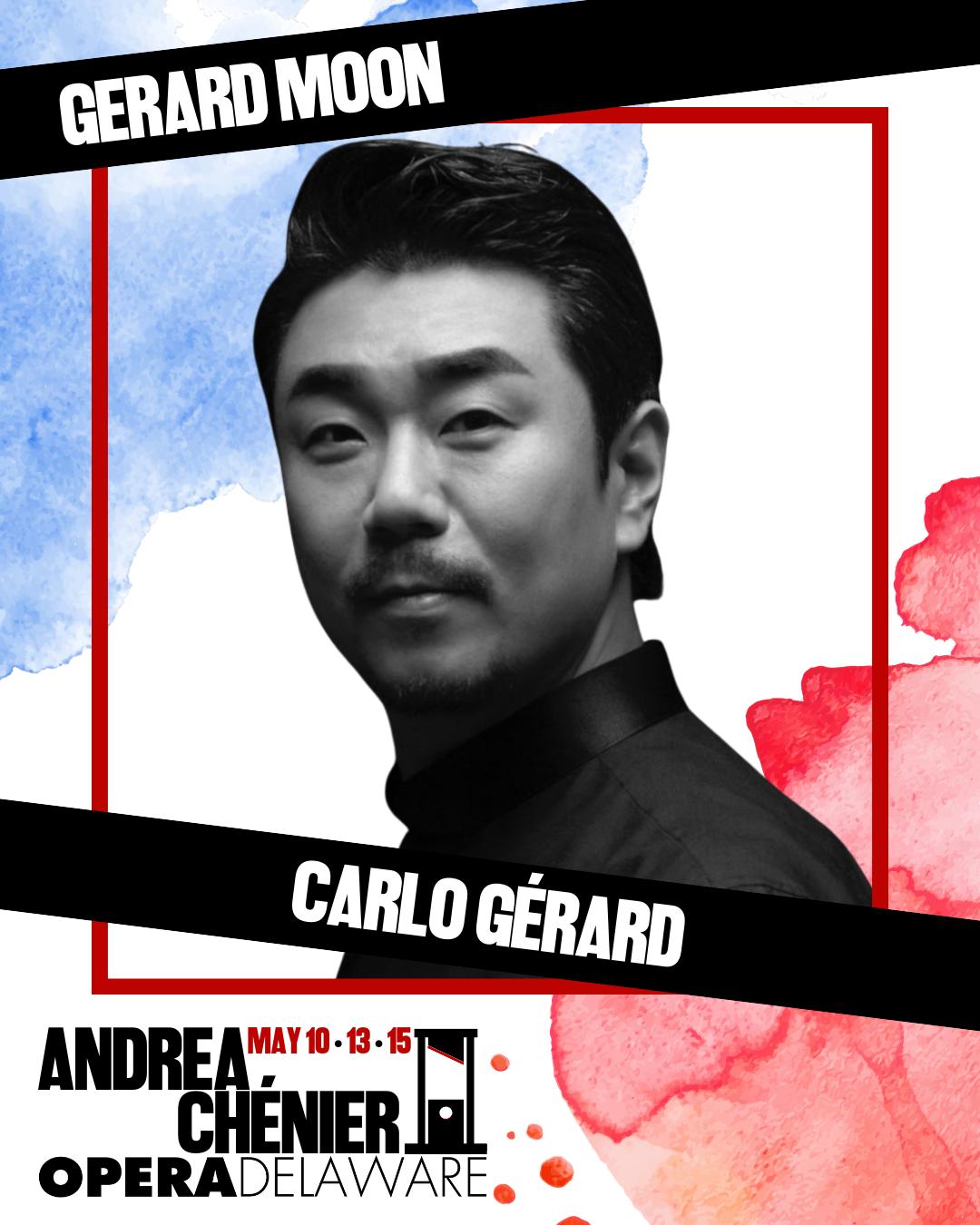
Gerard moon as schaunard in la bohème | Photo by joe del tufo

General Director Brendan Cooke sums it up best:

“Tosca remains one of the most performed operas worldwide, 125 years after its premiere. Last seen at OperaDelaware in 2010, we are long overdue in bringing Puccini’s masterpiece back to The Grand!”

The Star Power

  • Emily Margevich makes her role debut as Floria Tosca, following her celebrated mainstage debut as Musetta in La bohème. Hailed by The New York Times as “charismatic and commanding,” she’s set to bring Tosca’s fiery spirit to life.

  • John Pickle returns as Tosca’s devoted lover, Cavaradossi—the passionate painter whose ideals put him in mortal danger. Audiences last cheered him on as Calaf in 2024’s Turandot.

  • Steven Condy, beloved for his comic brilliance in roles like Falstaff and Benoit/Alcindoro (La bohème), takes a darker turn as Baron Scarpia—the ruthless police chief whose power games ignite the opera’s suspense.

The production reunites director Haley Stamats and conductor Domenico Boyagian, both fresh from the success of last season’s La bohème. With their creative synergy, expect Tosca to be visually stunning, emotionally charged, and musically unforgettable.

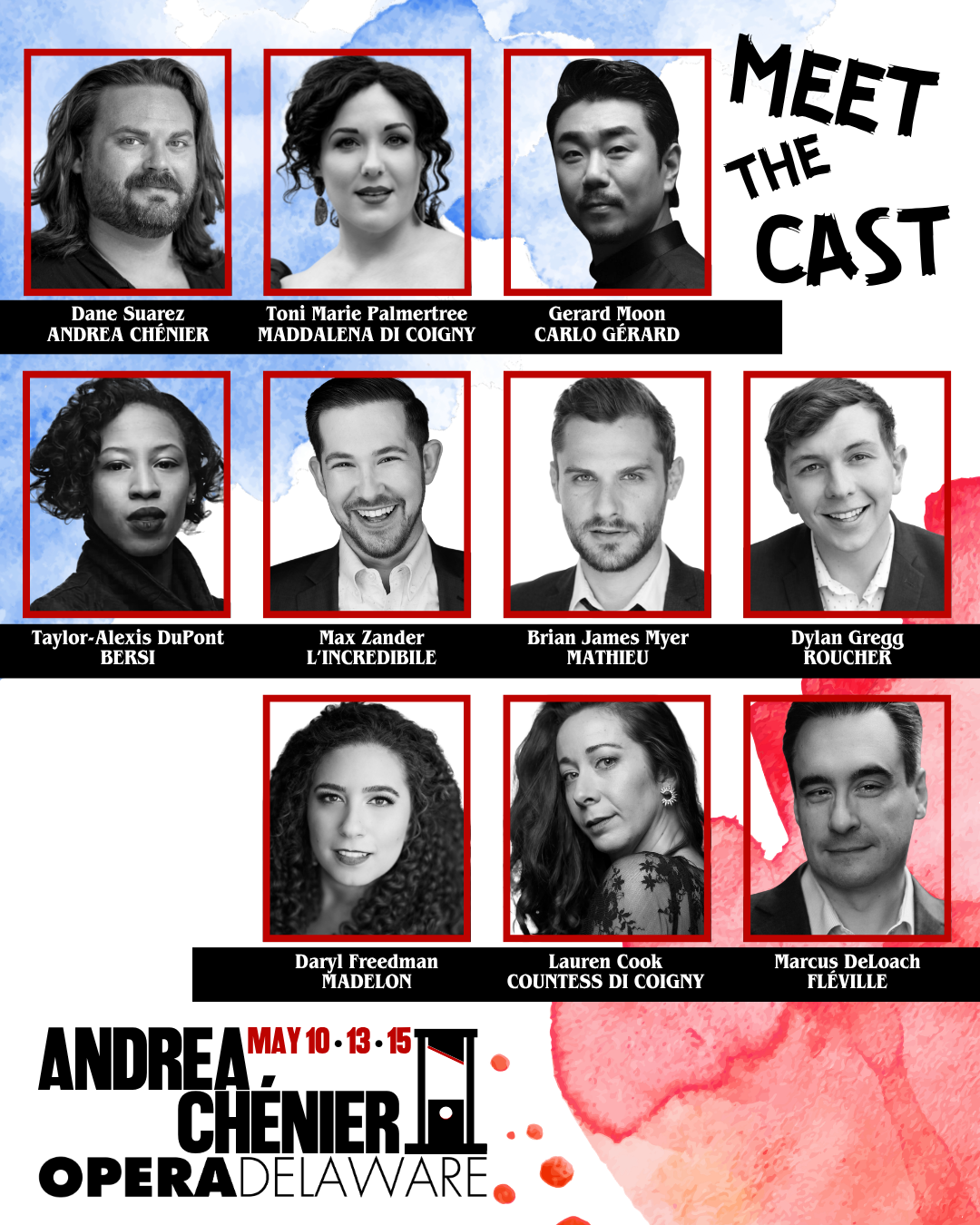
Supporting roles include OD Company Artist Gerard Moon (Angelotti, the escaped prisoner whose plight sparks the action) and OD favorite Brian James Myer (the bumbling Sacristan), adding layers of intrigue and comic relief to Puccini’s masterpiece.

👉 Learn more about Tosca here.

Dane Suarez as the duke of mantua in rigoletto | Photo by joe del tufo

May 2026: Giordano’s Andrea Chénier

toni marie palmertree as mimì in la bohème | Photo by joe del tufo

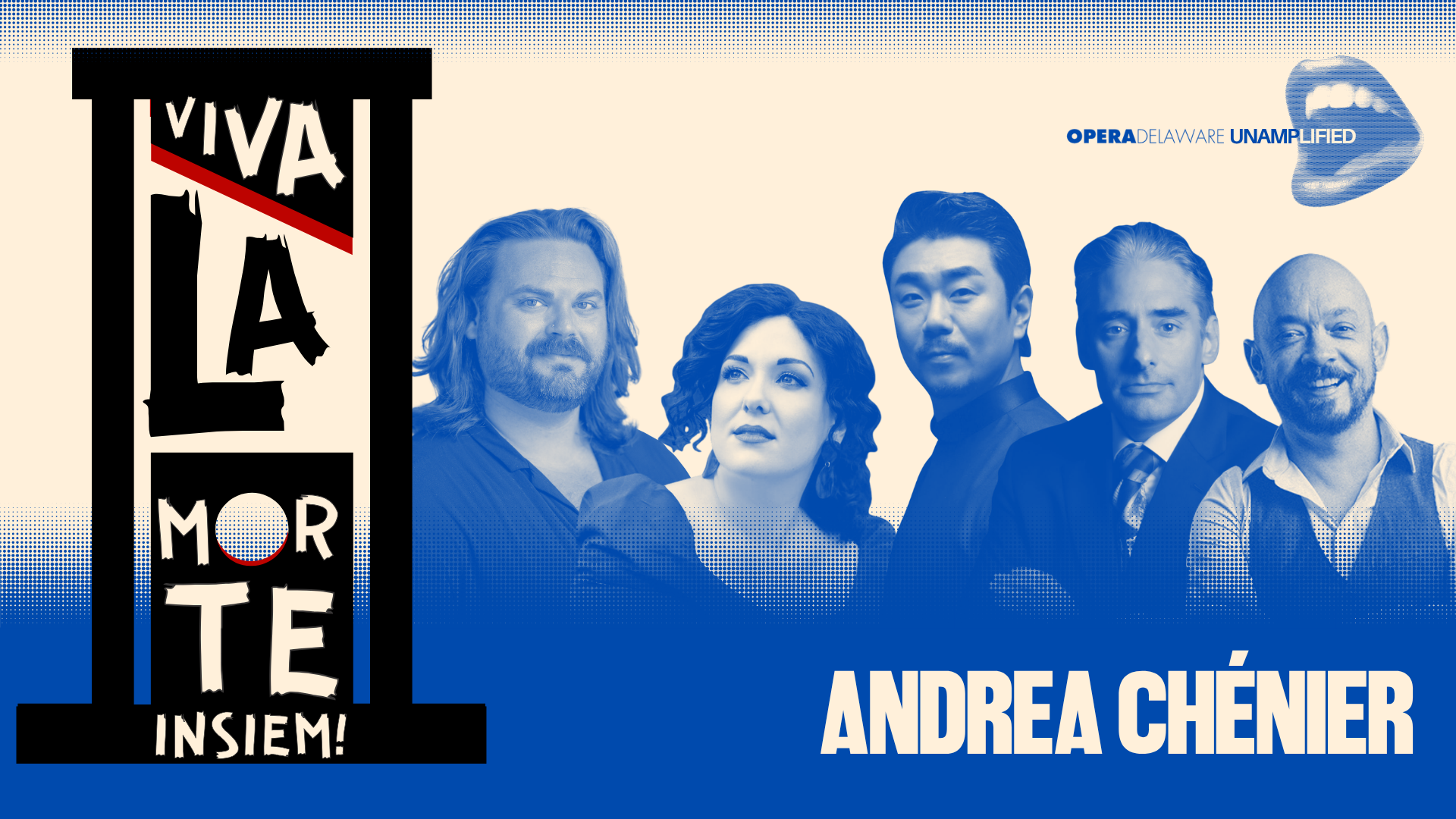
In May, OperaDelaware ups the stakes again with a company premiere: Umberto Giordano’s Andrea Chénier, running May 10, 13, + 15 at The Grand.

Rarely staged but deeply powerful, this operatic gem drops audiences into the French Revolution’s Reign of Terror—where art, politics, and passion collide.

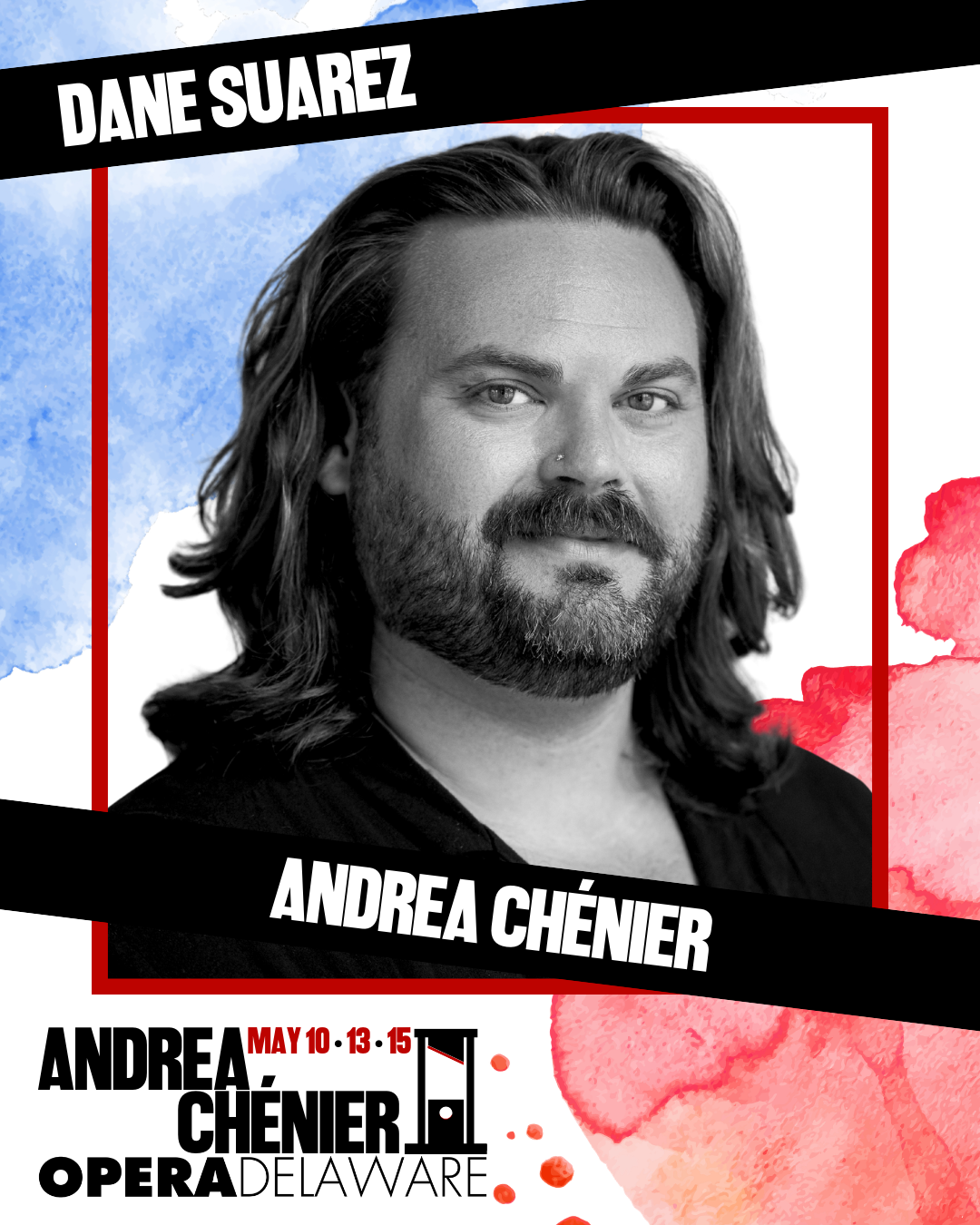
  • Dane Suarez takes on the towering titular role of the poet Chénier, whose outspoken verse and ideals make him both a hero and a target.

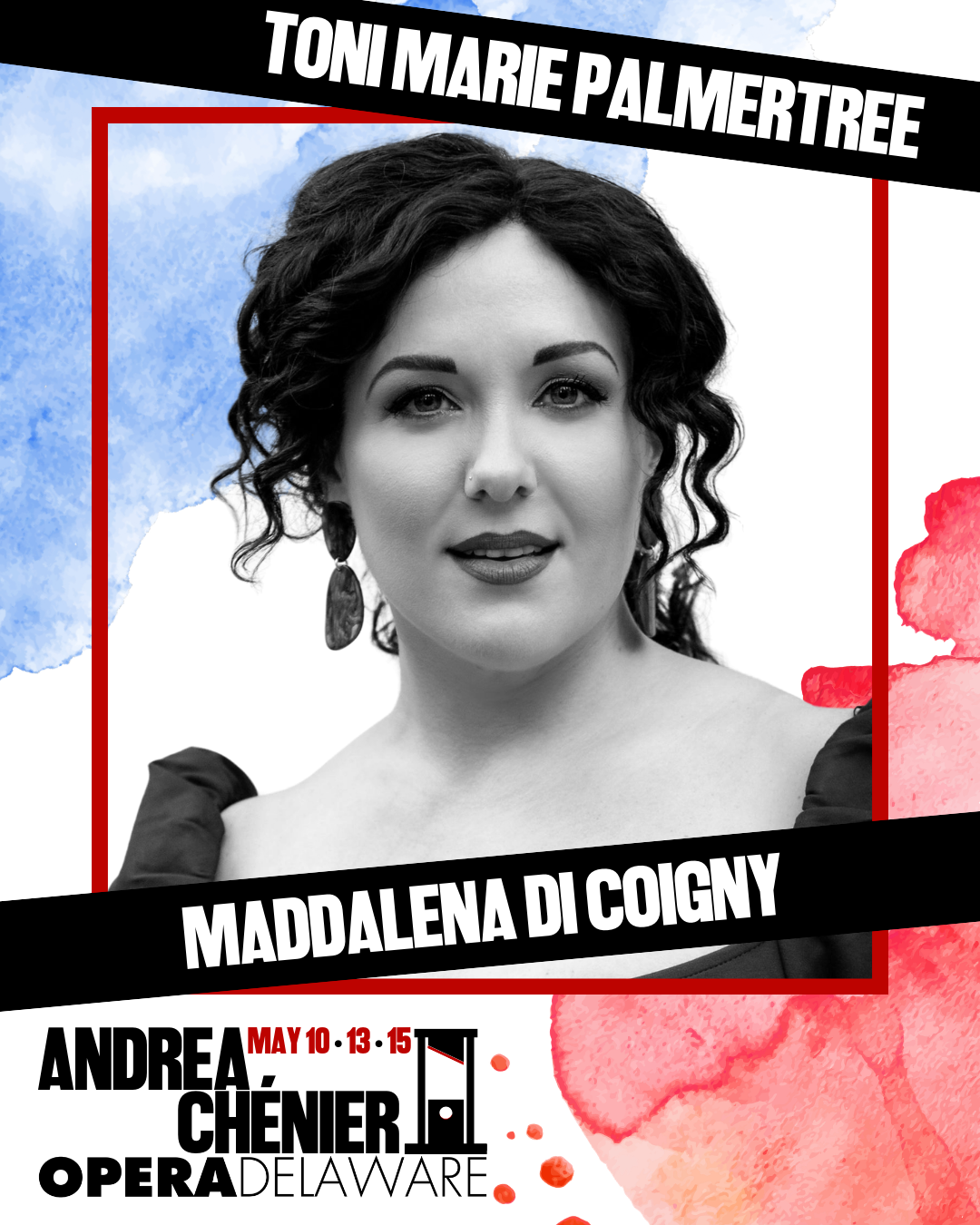
  • Toni Marie Palmertree sings Maddalena, the aristocrat whose love for Chénier becomes a beacon of hope amid chaos.

This landmark production also coincides with OperaDelaware hosting the 2026 OPERA America Conference, shining a national spotlight on Wilmington as a hub for operatic excellence.

👉 Explore more about Andrea Chénier here.

Why This Season Matters

OperaDelaware’s upcoming season balances beloved classics with rare treasures—giving both seasoned opera lovers and newcomers something to be excited about. By continuing its partnership with Opera Baltimore, the company expands regional access to world-class productions while keeping its mission of collaboration and innovation at the forefront.

From Puccini’s soaring arias to Giordano’s revolutionary fervor, the 2025–2026 season promises unforgettable nights at the opera.

Mark your calendars, secure your seats, and get ready for a season of music, drama, and unforgettable artistry.