
free presentations by scholars + creatives
Before select Chamber Series performances this season, join us in the Presser Black Box Theater for casual conversations and presentations that take you behind the music and inside the productions. Every Chamber Chat is free and open to the public at the OperaDelaware Studios, 45 minutes before the performance. You don't need a performance ticket to attend, and pre-registration is recommended.
fernanda
November 13 @ 6:45pm – Spain Takes the Stage: A Musical Journey from Opera to Zarzuela with Dr. Chad Gasta – Professor of Spanish + Associate Dean | University of Delaware
November 15 @ 1:15pm – Exploring OperaDelaware's 2026-27 Season with Eric Einhorn – General Director | OperaDelaware
written in secret
January 22 @ 6:45pm – Daron Hagen – Composer | Songs of Madness and Sorrow
January 24 @ 1:15pm – Dr. Holly Myers – Assistant Professor of Russian | OperaDelaware
Le Villi
March 19 @ 6:45pm – Dr. Aaron Ziegel – Associate Professor of Music History + Culture | Towson University
March 21 @ 1:15pm – Katherine M. Carter – Stage Director | Le Villi
orpheus retold
April 9 @ 6:45pm – TBA
April 11 @ 1:15pm – Dr. Tyson Sukava – Associate Professor of Ancient Greek + Roman Studies | University of Delaware
Fernanda chats

Eric Einhorn
Eric Einhorn joined OperaDelaware as General Director beginning August 1, 2026, bringing more than twenty years of experience in artistic leadership, opera direction, and community-centered production to the company. Praised by Opera News for his "keen eye for detail and character insight," Einhorn has directed productions at the Metropolitan Opera, Lyric Opera of Chicago, Glimmerglass Opera, Pittsburgh Opera, Fort Worth Opera, Wolf Trap Opera, and Michigan Opera Theater, among many others. From 2012 to 2023, he served as co-founding General and Artistic Director of On Site Opera, the country's only opera company dedicated to site-specific productions. His direction of Amahl and the Night Visitors at the Sunday Breakfast Mission this December marks a natural homecoming for a director whose career has been built on the conviction that the most powerful performances happen when art meets community on its own ground. Einhorn holds a Bachelor of Music degree in Opera Directing and Voice Performance from the Oberlin Conservatory of Music.
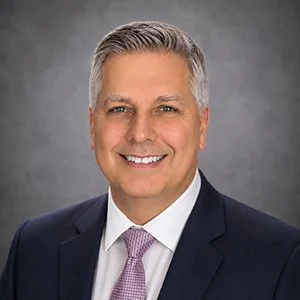
Dr. Chad Gasta
Dr. Chad Gasta is professor of Spanish in the Department of Languages, Literatures, and Cultures and Associate Dean for Undergraduate Academic Affairs in the College of Arts and Sciences at University of Delaware. Until 2022, he served as professor and chair of the Department of World Languages and Cultures at Iowa State University where he also served as director of International Studies, co-director of the Languages and Cultures for Professions (LCP) program. He also founded and co-directed Iowa State's largest study abroad program, the ISU on the Mediterranean – Summer in Valencia, Spain, program.
Gasta teaches a wide array of courses including Spanish for Global Professionals, Spanish Conversation for Professionals, Spain Today, Spanish Civilization and Culture as well as advanced courses on the literatures and cultures of early modern Spain and Latin America. He welcomes the opportunity to work with graduate students interested in Spain's early modern period.
His research focuses on the intersection of arts and sciences and material cultures and early modern Spanish and Latin American literature, in particular early opera and musical culture, the commedia, Cervantes, and the picaresque. He also writes on global education and international engagement through study abroad.
written in secret chats
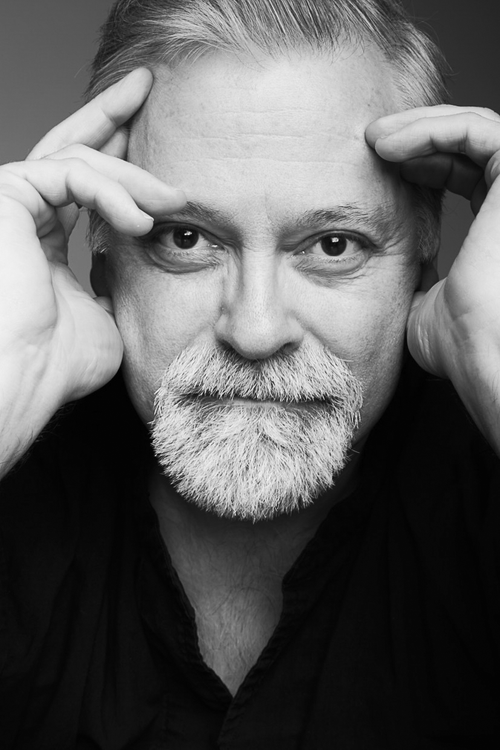
daron hagen
Daron Hagen (composer of Songs of Madness and Sorrow) is an auteur whose multi-modal practice treats stage, text, and moving image as a single, interlocking oeuvre. For the Bardo Trilogy, he served simultaneously as composer, librettist, director, and editor, establishing Operafilm as an autonomous genre where 14 operas, 6 symphonies, 14 concertos, and over 500 art songs interlock with a literary output that includes the memoir Duet With the Past, the treatise Exploring Operafilm, and the historical novel The Rosebud Row.
This trajectory was forged through early associations with Leonard Bernstein, Ned Rorem, Lukas Foss, David Diamond, and Gore Vidal. Following training at Curtis and Juilliard, his career has been highlit by commissions from The Philadelphia Orchestra, the National Symphony Orchestra, Seattle Opera, and the College Band Directors National Association. His practice encompasses anniversary works for the New York Philharmonic's 150th, the Buffalo Philharmonic's 90th, ASCAP's 75th, and The Cecilia Chorus of New York for the 75th anniversary of the United Nations’ Universal Declaration of Human Rights, alongside creative partnerships with virtuosos and literary minds including Gerard Schwarz, JoAnn Falletta, Paul Muldoon, Stephen Wadsworth, and Kate Lindsey.
A Lifetime Member of the Corporation of Yaddo and founding artistic director of the New Mercury Collective, Hagen is a Guggenheim Fellow whose work has been sustained by two awards from the American Academy of Arts and Letters, the Kennedy Center Friedheim Prize, and international residencies from the Rockefeller, Camargo, and Bogliasco foundations. He creates in Upstate New York.
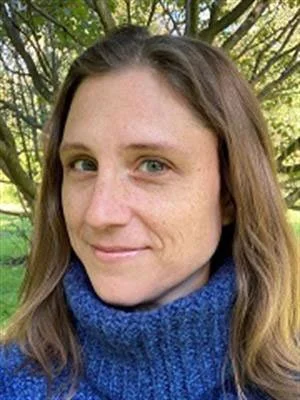
Dr. holly myers
Holly Myers is an Assistant Professor of Russian in the Department of Languages, Literatures, and Languages at University of Delaware. She chairs the Russian Studies program, which offers majors, minors, and a rich extracurricular program, including Russian-language cooking classes, interdisciplinary workshops, and Russian tea meetings. She teaches Russian language courses at all levels and a wide range of content courses in English translation, such as the popular course on Vampires in Folklore, Literature, and Film.
Prof. Myers's book manuscript, Moving Target: The Soviet-Afghan War in Russian Culture, argues that a new era of war storytelling in the Soviet and post-Soviet world began unnoticed with the Soviet-Afghan War (1979-89). Brezhnev's Victory Cult from the 1960s exemplifies the uniform state-driven narratives of earlier wars that clearly defined participants, justifications, and consequences. Stories about the Soviet-Afghan War, however, were initially driven by culture, not the state, which resulted in a range of different, even conflicting conclusions about the war's significance. Since Putin's rise to power, these different narrative strands have coalesced around an emphasis on masculinity that is developed and proven through participation in “special military operations,” without conflict-specific justifications. Putin's regime has rehabilitated much of the Soviet past; now, the Soviet-Afghan War and its veterans are also being reframed in Russian mainstream culture to more thoroughly valorize the Russian military, past and present. The developments and trends that Prof. Myers identifies and examines in Soviet-Afghan War stories in Soviet and Russian-language culture from the 1980s to the present day provide compelling new insights into the ongoing militarization of Russian society and culture.
le villi chats
Dr. aaron Ziegel
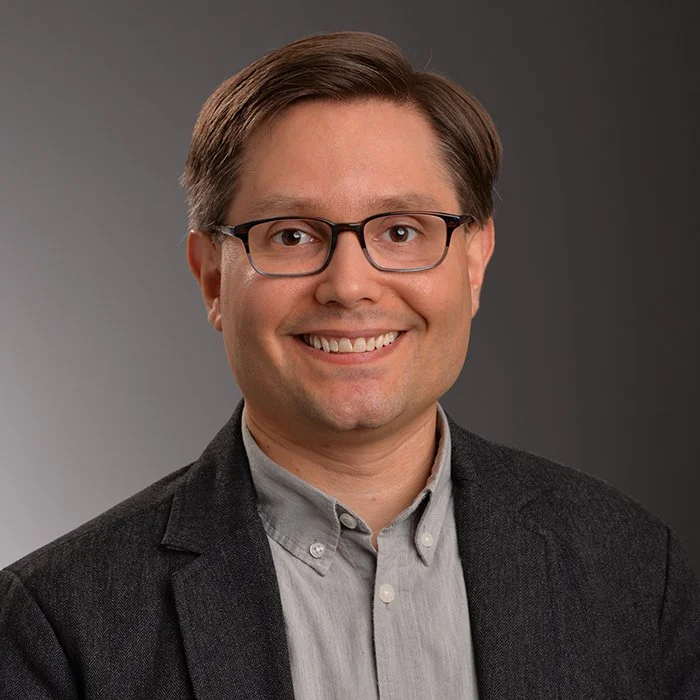
Dr. Aaron Ziegel is an Associate Professor and Division Leader of Music History and Culture. He teaches courses on music in the United States, Western art music, opera studies, symphonic literature, and writing about music to music majors, non-majors, and graduate students.
His research spans American opera, film music, American popular song, and the army training camp music of World War I, with a central focus on American operas of the early 20th century. Articles in Music and Politics (2019) and the Opera Journal (2009) and a chapter in In Search of the “Great American Opera” (Waxmann Verlag, 2016) trace the emergence of a nationalist style of opera writing. Additional articles appear in American Music, Music Research Forum, Engaging Students: Essays in Music Pedagogy, and the Journal of Music History Pedagogy. He has presented at annual meetings of the American Musicological Society, the Society for American Music, the College Music Society, the Nineteenth Century Studies Association, and the National Opera Association.
Dr. Ziegel is active in public musicology and is a familiar pre-concert lecturer in the Baltimore region. As Scholar in Residence with Opera Baltimore, he designs and presents lecture series accompanying every opera the company produces, published in the “Opera Insights” section of the company’s website. He also lectures frequently for Pro Musica Rara, the Handel Choir of Baltimore, and Opera Delaware.
He received a Bachelor’s in Piano Performance, summa cum laude, and a Master’s in Music History from the University of Cincinnati, College-Conservatory of Music, and a Ph.D. in Musicology from the University of Illinois at Urbana-Champaign.

Katherine M. Carter is a New York-based stage director of opera and theatre whose work spans major houses, young artist programs, and boundary-pushing new work across the country. Recent credits include a new staging of Verdi's Nabucco for the Canadian Opera Company, a new production of Dialogues des Carmélites for Wolf Trap Opera, and engagements with San Francisco Opera, Houston Grand Opera, and the Metropolitan Opera. Frequently in demand for her consent and community-based approach to rehearsal, Carter brings expertise across a wide range of mediums and has worked with the Ryan Opera Center at Lyric Opera of Chicago, Santa Fe Opera, Manhattan School of Music, The Juilliard School, and On Site Opera, among many others. Carter is a certified Intimacy Director through IDC Professionals and is the co-founder of The MITTEN Lab, a residency for emerging theatre artists in northern Michigan. Written in Secret marks her OperaDelaware debut.
Orpheus Retold Chats
Dr. Tyson Sukava
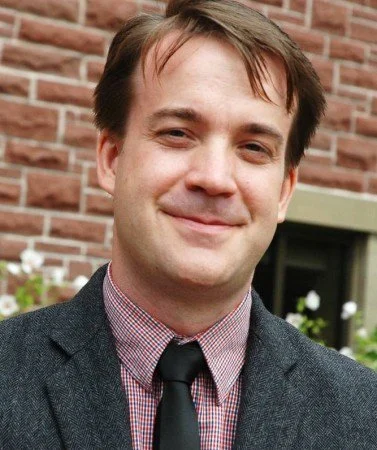
Dr. Tyson Sukava is an Associate Professor of Classics at University of Delaware. His general research interests cluster around the intellectual history of ancient Greece and Rome, with a primary focus on Greek medicine and science. His current projects examine the channels for exchanging ideas between so-called expert groups and the general public and how these ideas were variously received and integrated. His research therefore extends to other genres, including especially Greek drama and lyric poetry.